 Full Text (PDF)
Abstract
This qualitative pre-post intervention study explored whether an experiential educational intervention could enhance preschool children’s environmental awareness and emerging understanding of climate change. The study was conducted over two weeks in a public kindergarten in Greece with a convenience sample of 18 children aged 4-6 years. The intervention used developmentally appropriate, play-based activities, including educational videos, guided discussions, collaborative projects, hands-on experiments, artistic expression, and recycling and renewable energy activities. Data were collected through semi-structured interviews conducted before and immediately after the intervention, complemented by parental observations. Interview data were analyzed using inductive qualitative content analysis supported by NVivo, with pre- and post-intervention responses compared across the five interview questions. The findings indicated improvements in children’s environmental vocabulary, recognition of human responsibility, understanding of selected climate change impacts, and identification of simple mitigation actions. Parents also reported increased environmental interest and related discussions at home. Although the findings suggest that preschool children can engage meaningfully with foundational climate concepts when these are taught through developmentally appropriate experiential strategies, the results are exploratory due to the small, single-site sample and the immediate post-intervention assessment.
License
This is an open access article distributed under the Creative Commons Attribution License which permits unrestricted use, distribution, and reproduction in any medium, provided the original work is properly cited.
Article Type: Research Article
INTERDISCIP J ENV SCI ED, Volume 22, Issue 3, 2026, Article No: e2615
https://doi.org/10.29333/ijese/18615
Publication date: 27 May 2026
Article Views: 2653
Article Downloads: 1294
Open Access HTML Content Download XML References How to cite this articleHTML Content
INTRODUCTION
Climate Change: A Global Challenge
Climate change has emerged as one of the most urgent global challenges of the 21st century (Abbass et al., 2022). There is strong scientific consensus, as documented by the intergovernmental panel on climate change (IPCC), that anthropogenic activities, notably the burning of fossil fuels and land use changes, have significantly contributed to global warming, leading to profound impacts on natural and human systems (IPCC, 2023). Rising global temperatures are already associated with increased frequency and intensity of extreme weather events, accelerated glacier and ice-sheet melting, sea-level rise, and substantial biodiversity loss (Beckmann & Winkelmann, 2023; IPCC, 2022; Parmesan & Yohe, 2003; Rilov et al., 2021; Rullens et al., 2022). Without timely and effective mitigation measures, climate change is projected to pose escalating risks to ecosystems, human health, food security, and economic stability, disproportionately affecting vulnerable populations and future generations (Adom, 2024; IPCC, 2023; Saleem et al., 2024; Sanober, 2023; Tchonkouang et al., 2024; Tschakert et al., 2013).
Importantly, climate change is not only an environmental crisis but also a social and ethical challenge, since those who have contributed least to the problem, including young children and marginalized communities, are likely to bear some of its most severe consequences (Adger et al., 2013; D. A. Brown, 2001; Derviş, 2007; O’Hara & Abelsohn, 2011). Addressing climate change therefore requires not only mitigation and adaptation, but also educational responses that help citizens develop knowledge, values, and dispositions for informed and constructive action (Abbass et al., 2022; Anderson, 2012; Feigin et al., 2025; Hampton & Whitmarsh, 2023; Henderson & Serafeim, 2020; Tosun, 2022). International organizations have emphasized this educational imperative; UNESCO, for example, has argued that transformative learning is necessary for human and planetary survival and that education systems must equip learners to respond to climate-related challenges (Douglas et al., 2024; UNESCO, 2021a). Within this broader agenda, there is growing recognition that sustainability education should begin in the earliest years of life rather than being postponed until later schooling (Abo-Khalil, 2024; Hosany et al., 2022; Pauw et al., 2015; Somerville & Williams, 2015).
The Role of Early Childhood Education in Climate Change and Sustainability
Education is widely recognized as a critical means of promoting sustainable development and addressing climate change (Hosany et al., 2022; Ozturk, 2023; Pauw et al., 2015; Somerville & Williams, 2015; Vare & Scott, 2007). Although climate change education has traditionally focused on adolescents and adults, early childhood is increasingly viewed as an important period for laying the foundations of environmental awareness, values, and habits (Ardoin & Bowers, 2020; Chawla & Cushing, 2007; Davis, 2009; Lamanauskas, 2023; Papanikolaou et al., 2020). Research in developmental psychology and environmental education suggests that young children’s curiosity, emotional responsiveness, and capacity to care for living things make them especially receptive to experiences that nurture responsibility toward the natural world (Hosany et al., 2022; Van De Wetering et al., 2022; Yoshikawa & Kabay, 2015).
For this reason, introducing environmental education at the preschool level is increasingly seen as educationally significant rather than premature (Barratt Hacking et al., 2007; Ernst & Monroe, 2004; Grindheim et al., 2019). Early childhood is a period in which basic understandings of weather, nature, place, and community are formed, making it a valuable stage for introducing age-appropriate ideas about environmental care and emerging climate-related understanding (Davis, 2009; Hedefalk et al., 2015; Meier & Sisk-Hilton, 2017; Spiteri, 2019). At the same time, young children are not merely future citizens; they can also influence present-day practices within their families and communities. Studies have shown that children can act as “agents of change” by communicating environmental ideas and encouraging practices such as recycling and energy saving at home (Ballantyne et al., 2001; Milakovich et al., 2018; Percy-Smith & Burns, 2013; Sear, 2018; von Braun, 2017; Walker, 2017).
Recent scholarship has moved beyond arguing that sustainability belongs in early childhood education and has begun to examine how it can be meaningfully enacted. Systematic reviews indicate that early childhood education for sustainability can support agency, participation, and ecological awareness when it is embedded in pedagogies that are relational, inquiry-oriented, and developmentally appropriate (Ardoin & Bowers, 2020; Hedefalk et al., 2015). Barratt Hacking et al. (2007) argue that effective environmental learning in the early years depends on connected pedagogies rather than simple transmission of information, while Cutter-Mackenzie-Knowles et al. (2020) emphasize that even complex issues such as climate change require pedagogical forms that respect children’s ways of knowing. Elliott and Davis (2009) similarly highlight both the promise of sustainability education in early childhood settings and the institutional and professional constraints that often limit its implementation. More recent work has reinforced these points by showing that contemporary preschool curricula increasingly frame sustainability in terms of participation, investigation, and collaboration (Ohlsson et al., 2022), and that play and children’s agency remain central to how sustainability is interpreted in early childhood settings (Kahriman-Pamuk & Borg, 2024). Together, these studies suggest that the question is no longer whether sustainability belongs in early childhood education, but how it can be translated into pedagogically coherent practice.
International policy developments point in the same direction. UNESCO (2021b) has called for education for sustainable development to be embedded across curricula, and recent research continues to argue that high-quality early childhood education can serve as a foundational context for environmental awareness, climate literacy, and sustainable living (Ardoin & Bowers, 2020; Güler Yıldız et al., 2021; Hedefalk et al., 2015; Somerville & Williams, 2015; Spiteri, 2023a). Even so, climate change remains less consistently addressed than sustainability more broadly, and in many contexts early childhood educators still receive limited guidance on how to teach it in developmentally appropriate ways.
Challenges in Teaching Climate Change to Preschoolers
Despite the strong rationale for beginning early, teaching climate change in preschool is not straightforward. The literature points to three interrelated challenges: developmental complexity, emotional sensitivity, and pedagogical or institutional constraints.
First, climate change is cognitively demanding for young children. Preschoolers are typically described as being in Piaget’s (1952) preoperational period, which is associated with concrete thinking, egocentrism, and limited capacity to understand abstract, large-scale, and long-term processes (Fleer & Hedegaard, 2010). Climate change, however, involves invisible mechanisms such as greenhouse gas accumulation, probabilistic patterns, long-term temporal scales, and complex causal chains (Bilgili et al., 2024; Hansen et al., 2025; L. Chen et al., 2022). Young children tend to reason through immediate and tangible experiences, which can make it difficult to distinguish climate from weather, or to connect everyday actions with broader planetary processes (D. D. Brown, 2008; Dündar-Coecke et al., 2021; Langevin et al., 2019; Sedlak & Kurtz, 1981; Yerlikaya et al., 2020). Research shows that children often conflate environmental problems, for example by linking littering directly to hotter weather or by treating climate change as equivalent to visible pollution (Brody, 1993; Covitt et al., 2009; Liu & Green, 2024; Mokhele-Ramulumo et al., 2025; Shepardson et al., 2009; Spiteri, 2022). Even when young children can articulate simple cause-and-effect relationships, they may still overgeneralize or hold misconceptions about environmental processes (Aksit, 2012; Gavrilas & Kotsis, 2024; Gontas et al., 2020; Liu & Green, 2024; Palmberg & Kuru, 2000; Palmer, 1995; Shepardson et al., 2012; Spiteri, 2023b; Spiteri & Pace, 2023). These developmental characteristics do not make climate education impossible, but they do mean that abstract scientific ideas must be translated into concrete, meaningful, and age-appropriate experiences (Gavrilas et al., 2024; Papanikolaou et al., 2021; Sanson et al., 2018).
Second, climate change poses emotional and ethical challenges. Because the issue is often communicated through alarming narratives, educators may worry about provoking fear, helplessness, or eco-anxiety in young children (Baker, 2024; Burke et al., 2018; Galway & Field, 2023; Jimenez Gomez Tagle & Vito, 2024; Karataş, 2014; Lammel, 2025; Léger-Goodes et al., 2022; Ojala, 2016; Öhman, 2016; Pihkala, 2020; Sangervo et al., 2022). This concern is especially salient in the early years, when children may have limited emotional resources for processing global threats. Educators therefore face a delicate task: they must foster awareness without burdening children with despair. Studies suggest that some teachers hesitate to address climate change precisely because they regard it as insufficiently developmentally appropriate or potentially distressing for young learners (Beaver & Borgerding, 2023; Burke et al., 2018; Ginsburg & Audley, 2020; Hickman et al., 2021; Ojala, 2012). This tension highlights the need for pedagogies that support agency, care, and constructive engagement rather than fear-based learning.
Third, practical and institutional barriers continue to limit implementation. Many early childhood educators report limited preparation in climate science and uncertainty about how to translate complex issues into simple, meaningful classroom experiences (Anderson, 2012; Beasy et al., 2023; Borg et al., 2014; Christoforaki et al., 2025; Gavrilas & Kotsis, 2025; Gontas et al., 2021; Hoekstra et al., 2024; Kharrazi et al., 2018; Kotsis & Gavrilas, 2025; Moshou & Drinia, 2023; Plutzer et al., 2016; UNESCO, 2019). Curricular pressures, the absence of explicit institutional guidance, and parental sensitivities can further discourage teachers from engaging with climate change in preschool settings (Davis & Elliott, 2014; Ginsburg & Audley, 2020; Hägglund & Samuelsson, 2009; Lammert, 2024; Lawson et al., 2019). Thus, the challenge is not simply whether preschool children are capable of beginning to engage with climate-related ideas, but how educators can design learning experiences that are scientifically meaningful, emotionally appropriate, and pedagogically feasible.
The Importance of Experiential and Play-Based Learning
The literature increasingly suggests that experiential and play-based learning offers a strong response to these challenges. Rather than treating climate change as a topic to be explained abstractly, experiential pedagogies translate it into forms of learning that are concrete, sensory, collaborative, and action-oriented (Bubikova-Moan et al., 2019; Edwards et al., 2014; Parker et al., 2022; Vartiainen et al., 2024). This is especially important in early childhood, where children learn most effectively through direct experience, exploration, dialogue, and symbolic expression rather than through formal exposition (Broadhead & Burt, 2012; Catucci et al., 2024; Gavrilas et al., 2025; Samuelsson & Kaga, 2008; Tamblyn et al., 2023). In this sense, experiential learning is not simply an engaging technique; it is a theoretical and pedagogical response to the developmental realities of early childhood.
Experiential approaches help make abstract environmental processes tangible. Hands-on investigations, visual materials, guided discussion, artistic representation, and collaborative projects enable children to connect unfamiliar concepts with observable phenomena in their everyday worlds (Davis, 2009; Georgopoulos et al., 2011; Hayes & Kraemer, 2017; Kaufman & Eshbaugh, 1996; Poudel et al., 2005; Trott & Weinberg, 2020; Yilmaz et al., 2024). Play-based learning also provides an emotionally supportive context in which children can explore environmental themes without being overwhelmed by them (Adamowski et al., 2020; Tekinbaş, 2008). Through imaginative, social, and creative activity, children can develop empathy, perspective taking, and problem solving in ways that remain developmentally appropriate (Alkair et al., 2023; Barratt Hacking et al., 2007; Cutter-Mackenzie & Edwards, 2013; Lieung et al., 2019; Wei et al., 2020). Recent work has continued to underline the pedagogical value of such approaches, showing that sustainability in early childhood is closely tied to play, participation, and agency (Kahriman-Pamuk & Borg, 2024), while inquiry-based learning in natural settings can support children’s early scientific understanding through educator-guided exploration (Speldewinde, 2024).
Research also indicates that experiential environmental learning can deepen children’s connection to nature and strengthen pro-environmental attitudes over time. Regular playful engagement with natural environments, including gardening, outdoor observation, and exploratory activities, has been associated with increased nature connectedness, care, and responsibility (Barrable & Booth, 2020; Chawla, 2008; Ernst & Theimer, 2011; Fägerstam & Samuelsson, 2014; Liefländer et al., 2013; Palmberg & Kuru, 2000). These findings are especially relevant to climate education, because they suggest that effective early interventions may depend less on transmitting complete scientific explanations and more on building meaningful experiential foundations from which understanding can grow. Experiential and play-based learning therefore offers not only a practical classroom strategy, but also a coherent theoretical basis for introducing complex environmental issues in the preschool years (Fyffe & Lewis, 2024; Spiteri, 2025).
Research Gap and Study Purpose
Although the case for early childhood sustainability education has become stronger, a more specific gap remains in relation to climate change education in preschool settings. Most empirical studies and intervention-based research on climate change education have focused on older learners in upper primary, secondary, and tertiary education, leaving the preschool years comparatively underexamined (Bhattacharya et al., 2021; Devecchi et al., 2025; García-Vinuesa et al., 2024; Kolenatý et al., 2022; Kundariati et al., 2025; Muccione et al., 2025; Stevenson et al., 2013; Tang, 2022). As a result, there is still limited empirical evidence about what preschool children can meaningfully understand about climate change, how that understanding can be supported without generating confusion or anxiety, and which pedagogical forms are most appropriate for this age group (Ardoin & Bowers, 2020; Elliott & Davis, 2009; Inter-Agency Network for Education in Emergencies [INEE], 2023; UNICEF, 2023). Furthermore, while national and international early childhood frameworks increasingly reference sustainability, explicit and pedagogically clear guidance on climate change remains uneven across contexts, including Greece until recently (Hedefalk et al., 2015; Kalogiannakis et al., 2021; Moshou & Drinia, 2023; Organisation for Economic Co-operation and Development [OECD], 2023).
More specifically, the literature still shows three weaknesses. First, many studies discuss the importance of early climate education in general terms, but fewer examine how preschool children actually articulate environmental and climate-related ideas before and after a structured educational intervention. Second, although experiential and play-based learning are frequently recommended, the link between these theoretical principles and the concrete design of climate-related activities is often assumed rather than explicitly demonstrated. Third, there is limited evidence from preschool contexts in Greece regarding how such interventions may influence not only children’s talk and understanding in the classroom, but also whether environmental awareness extends into the home environment through parent-observed changes. Addressing these gaps is important for both practice and theory: for practice, because educators need developmentally appropriate models they can use; for theory, because the field still needs clearer accounts of how experiential and play-based principles can be operationalized in early childhood climate education.
The present study addresses this gap by designing, implementing, and evaluating an experiential educational intervention focused on environmental awareness and climate change understanding among preschool children in Greece. The intervention used developmentally appropriate, play-based methods, including educational videos, guided discussions, collaborative group projects, hands-on experiments and demonstrations, artistic representations, and recycling and renewable energy activities, in order to introduce basic climate-related concepts in concrete and meaningful ways. In doing so, the study contributes not only practical evidence about the feasibility of early childhood climate education, but also a more explicit account of how experiential and play-based learning principles can be translated into an intervention framework for preschool settings. Accordingly, the study was guided by the following research questions:
-
How does participation in an experiential educational intervention influence preschool children’s environmental awareness?
-
How does participation in the intervention influence preschool children’s emerging understanding of climate change, including its causes, impacts, and possible solutions?
-
How do parental observations reflect possible changes in children’s environmental interest, language, and everyday practices following the intervention?
METHODOLOGY
Research Design
This study employed a qualitative pre-post intervention design to explore whether an experiential educational intervention could enhance preschool children’s environmental awareness and emerging understanding of climate change. This design was considered appropriate because the study aimed to examine how young children expressed environmental and climate-related ideas before and after participation in a developmentally appropriate educational program, rather than to test causal effects through experimental comparison. Given the exploratory nature of the study and the young age of the participants, a qualitative design allowed close attention to children’s language, perceptions, and meaning-making processes.
Participants
Participants were 18 children aged 4 to 6 years enrolled in a public kindergarten in Greece (Table 1). The sample was drawn from a single classroom using convenience sampling, as the intervention was implemented within the natural setting of the class. Although small, this sample was considered appropriate for an exploratory qualitative study focused on in-depth examination of children’s responses within a specific educational context.
Table 1. Age-group and gender distribution of the participating children
|
Written informed consent was obtained from all parents or legal guardians, and verbal assent was obtained from each child before participation. These procedures followed established ethical principles for research with young children, with particular attention to voluntary participation, children’s comfort, and their right to withdraw at any point (Alderson & Morrow, 2011).
Research Tool
The primary research instrument was an individual semi-structured interview protocol designed to assess children’s environmental awareness and basic understanding of climate change. Semi-structured interviewing was appropriate because it allowed flexibility to explore children’s spontaneous ideas while maintaining enough consistency across participants to support comparison between pre- and post-intervention responses (Christensen & James, 2017).
The interview protocol was developed in relation to the aims of the study and was reviewed for developmental appropriateness for preschool-aged children. It consisted of five open-ended core questions:
-
Do you know what climate change is? If yes, what is it? If not, what do you imagine it to be?
-
What causes climate change?
-
Who is responsible for climate change?
-
What are the impacts of climate change, and what can we do to prevent it?
-
Have you heard about ice melting? What happens there?
These questions were phrased in simple language to encourage children to express their own ideas, explanations, and associations. When needed, gentle prompts were used to invite elaboration without directing responses.
In addition to the child interviews, parental observations were collected after the intervention as supplementary data to explore whether the children’s environmental interest and climate-related talk extended beyond the classroom. Parents were invited to respond to the question: “Have you noticed increased interest from your child regarding the impacts of climate change (melting ice, extreme weather events, global warming)?” These reports were used as supportive contextual evidence rather than as an independent validated measure and were interpreted cautiously.
Data Collection
Data were collected through face-to-face individual interviews conducted with each child at two time points: once before the intervention and once immediately after the two-week intervention period. Each interview lasted approximately 10-15 minutes and was conducted in a quiet, familiar space within the kindergarten to support the children’s comfort and engagement. The interviewer followed the semi-structured protocol in a gentle, conversational manner, using prompts when necessary to help children elaborate on their answers while preserving the openness of the interaction.
All interviews were conducted in Greek, the children’s native language, to ensure comfort and authentic expression. With parental permission, interviews were audio-recorded and then transcribed verbatim. For the purposes of the manuscript, selected excerpts were translated into English with attention to preserving the meaning of the children’s original expressions (Squires, 2009).
Following the intervention, parental observations were also collected in order to document any climate- or environment-related comments, questions, or behaviors noticed at home. These data were used to complement the interview findings and to provide a broader picture of the possible reach of the intervention beyond the classroom setting.
Data Analysis
The interview data were analyzed using an inductive qualitative content analysis approach supported by NVivo 11 (QSR International). The analysis focused on comparing children’s pre- and post-intervention responses across the five interview questions in order to identify recurring response patterns, shifts in vocabulary, and changes in the ways children describe climate-related ideas.
First, the pre- and post-intervention transcripts were read repeatedly to achieve close familiarity with the data. Meaningful segments of text were then coded in relation to the study focus, including environmental awareness, climate change understanding, human responsibility, perceived impacts, and suggested actions. The codes were compared across participants and across the two time points in order to identify recurrent patterns and descriptive changes in the children’s responses. These patterns were then synthesized and presented question by question in the Results section.
As a complementary analytic aid, word-frequency queries were also conducted in NVivo to generate the word clouds presented in the Results section. These visualizations were used descriptively to illustrate changes in the salience of key terms across the two time points; they did not constitute the primary analytic procedure.
Formal inter-rater reliability was not calculated, as the study was designed as a small-scale exploratory qualitative investigation. However, the analytic process was conducted reflexively through repeated comparison of transcripts, codes, and emerging response patterns in order to strengthen consistency and interpretive transparency. This absence of formal inter-rater reliability is acknowledged as a limitation of the study.
Educational Intervention
The educational intervention was implemented over a period of two weeks and was integrated into the kindergarten’s regular curriculum. It was designed as an experiential and play-based educational program aimed at enhancing children’s environmental awareness and introducing foundational climate change concepts in developmentally appropriate ways. Activities were implemented collaboratively by the classroom teacher and the researchers.
The intervention was grounded in the view that young children learn most effectively through concrete experience, guided dialogue, active participation, and symbolic expression rather than through abstract, lecture-based instruction. Accordingly, the intervention sought to make climate-related ideas tangible and meaningful through activities that promoted observation, discussion, collaboration, experimentation, artistic expression, and everyday environmental action. Table 2 presents the pedagogical alignment of the intervention activities.
Table 2. Structure and pedagogical alignment of the intervention
|
More specifically, the intervention comprised six components as follows.
Viewing educational videos
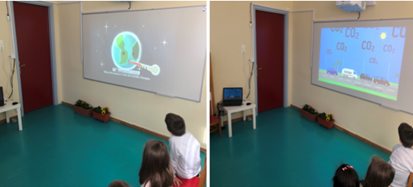
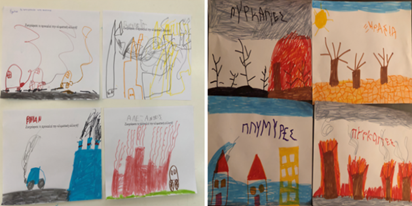
Children watched short, age-appropriate videos introducing basic environmental phenomena such as weather changes, the greenhouse effect, and the importance of nature conservation (Figure 1). These visual materials provided accessible representations of unfamiliar ideas and supported the transition from everyday observation to emerging environmental concepts.
Guided discussions
After each video or major activity, the children participated in teacher-facilitated group discussions. Open-ended questions encouraged them to reflect on what they had seen, describe their ideas, and ask questions. These discussions supported verbal expression, collective meaning-making, and clarification of developing understandings.
Collaborative group projects
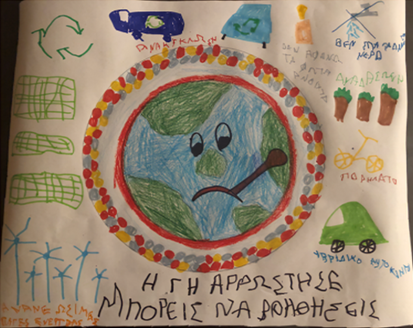
Children engaged in cooperative projects such as creating a mural about the earth’s climate, assembling collages contrasting clean and polluted environments, and building simple model ecosystems (Figure 2). These activities enabled them to apply new ideas in social and creative contexts and reinforced learning through participation and dialogue.
Hands-on experiments and demonstrations
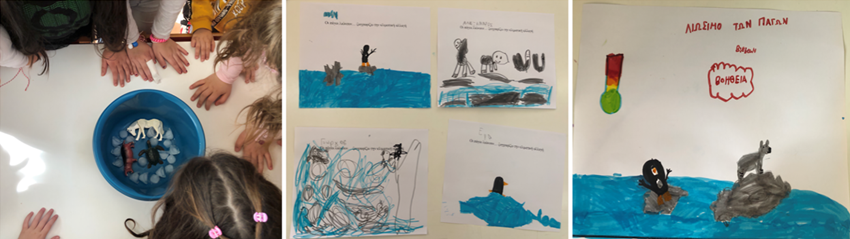
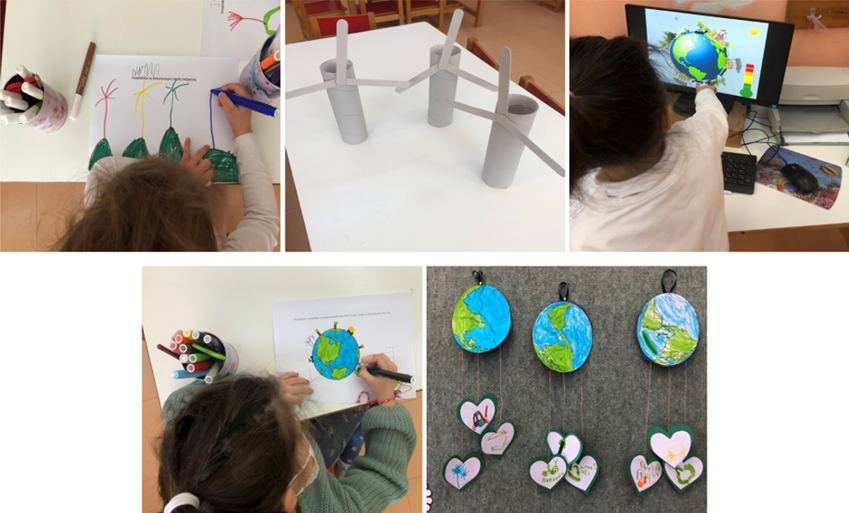
Age-appropriate science activities were used to illustrate selected climate-related phenomena. For example, children observed the melting of ice cubes to simulate ice loss and rising water levels, and they participated in a simple demonstration of heat retention under glass to model the greenhouse effect (Figure 3). These activities were intended to bridge the gap between abstract environmental concepts and direct sensory experience.
Artistic representations
Children were invited to express their understanding through drawing, painting, and crafting (Figure 4). They produced artwork on themes such as our environment, changing weather, and caring for the earth, allowing them to communicate their interpretations in symbolic and developmentally appropriate ways.
Recycling and renewable energy activities
The intervention also included practical sustainability activities, such as sorting classroom waste for recycling and reusing materials in art projects (Figure 5). Simple demonstrations involving a solar-powered toy and pinwheels were used to introduce the ideas of renewable energy and responsible resource use in an accessible form.
Throughout the intervention, the educators acted primarily as facilitators rather than didactic instructors. Their role was to organize interactive learning situations, ask guiding questions, and encourage reflection, participation, and constructive engagement with environmental issues.
RESULTS
Consistent with the structure of the interview protocol and the study’s comparative pre-post design, the findings are presented according to the five interview questions used before and after the intervention. Within each question, recurrent response patterns are described and illustrated with representative excerpts from the children’s interviews. The word clouds are included as descriptive visual aids to illustrate shifts in vocabulary and expression across the two phases of data collection.
Question 1. Do You Know What Climate Change Is? If Yes, What Is It? If Not, What Do You Imagine It to Be?
Before the intervention, most children showed limited familiarity with the term climate change. Their responses were typically uncertain, vague, or speculative, as also reflected in the prominence of words such as “don’t,” “know,” “something,” and “what” in the pre-intervention word cloud (Figure 6). For example, one child responded, “No ... I don’t know,” while another said, “Climate change ... I think it’s something you change.” These responses suggest that, initially, the term had little clear environmental meaning for most participants.
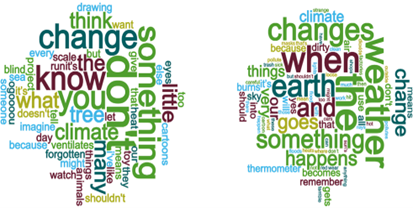
After the intervention, the children’s responses became more concrete and more closely related to environmental change. In the post-intervention word cloud, words such as “weather,” “earth,” “changes,” “heat,” and “air” became more prominent, indicating a shift toward a more developmentally appropriate understanding of climate change as a change in environmental conditions. One child stated, “Yes ... it might flood ... the weather changes.” Another explained, “Climate change is something where ... when we use cars, factories ... lights and all those things and shops, then the earth ... can have climate change... the earth heats up. That’s what climate change means.” Overall, the post-intervention responses suggest greater conceptual clarity and stronger links between climate change, human activity, and environmental effects.
Question 2. What Causes Climate Change?
Before the intervention, the children’s responses were marked by uncertainty, as shown by the prominence of terms such as “don’t,” “know,” “how,” and “what” in the pre-intervention word cloud (Figure 7). Although words such as “air,” “change,” and “climate” appeared, they were not usually connected to clear causal explanations. For example, one child said, “I don’t know how it is caused,” while another answered, “I think it is caused ... the change is something you change.”
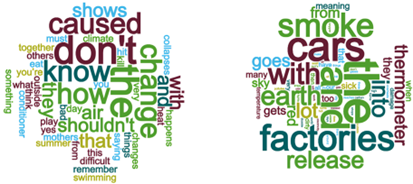
After the intervention, the children’s responses became more specific and more clearly associated with human activities. In the post-intervention word cloud, terms such as “cars,” “factories,” “smoke,” “release,” “earth,” and “thermometer” became more prominent. One child stated, “With too many cars ... with the smoke they release ... it gets sick ... the thermometer goes into the red.” Another said, “The earth ... burns ... the sun’s rays hit it ... carbon dioxide ... goes into the sky ... and pollutes the earth.” Although simplified, these responses indicate a more developmentally appropriate understanding of climate change causes, especially the role of pollution and emissions.
Question 3. Who Is Responsible for Climate Change?
Before the intervention, many children appeared unsure about who or what might be responsible for climate change. This uncertainty is reflected in the prominence of words such as “don’t,” “know,” “maybe,” “nothing,” and “think” in the pre-intervention word cloud (Figure 8). Some responses were hesitant or imaginative rather than environmentally grounded. For example, one child answered, “Maybe a thief dressed up as a person,” while another simply said, “I don’t know.”
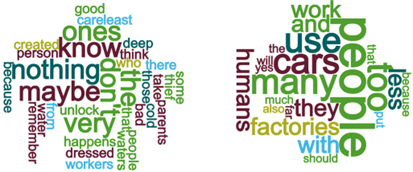
After the intervention, the children more often identified people and everyday human activities as linked to climate change. The post-intervention word cloud gives greater prominence to words such as “people,” “cars,” “factories,” “humans,” and “many.” One child stated, “We ... with cars ... and with factories,” while another said, “People ... use too many cars.” These responses suggest a clearer recognition that climate change is associated with human actions rather than with random or imaginary causes.
Question 4. What Are the Impacts of Climate Change, and What Can We Do to Prevent It?
Before the intervention, most children showed limited understanding of both the impacts of climate change and possible ways to respond to it. The pre-intervention word cloud was dominated by terms such as “don’t,” “know,” “nothing,” “maybe,” and “who” (Figure 9). In some cases, the children interpreted the word change in an everyday sense rather than in an environmental one. For example, one child said, “I don’t know,” while another replied, “Where change means that something changes ... like if I say give me that toy, then I will change and say no, not that one.”
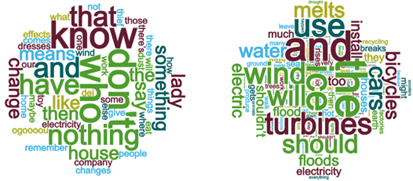
After the intervention, the responses became broader, more specific, and more action-oriented. In the post-intervention word cloud, words such as “wind,” “turbines,” “electric,” “recycling,” “cars,” “bicycles,” “sea,” “floods,” and “melts” became more prominent. These responses suggest that the children were beginning to connect climate change with visible consequences such as rising temperatures, melting ice, and flooding, while also identifying practical actions such as recycling, reducing car use, and choosing alternative means of transport. One child stated, “The ice breaks ... we flood ... and it gets very hot ... we shouldn’t use many cars ... we should use electric cars ... walk ... use bicycles ... skateboards ... have wind turbines to produce electricity.” Another said, “Some animals might be on the ice and then fall into the sea if the ice melts ... there might be sea water entering the houses ... floods when the waves come ... we should install wind turbines, not leave the lights on ... we should use bicycles ... we can use trucks ... and school buses.”
Question 5. Have You Heard About Ice Melting? What Happens There?
Before the intervention, the children’s responses reflected limited and mainly everyday understandings of ice melting. In the pre-intervention word cloud, words such as “know,” “don’t,” “there,” “ice,” “cold,” and “yes” were most prominent (Figure 10). Although some children recognized that ice melts, their responses were usually linked to familiar daily experiences rather than to environmental change. For example, one child answered, “Let me think ... a hairdryer,” while another said, “No ... I don’t know.”
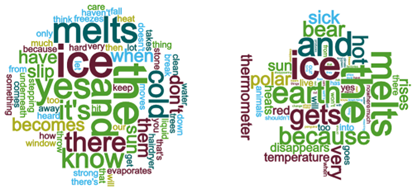
After the intervention, the children’s responses showed clearer links between ice melting, rising temperatures, and environmental consequences. In the post-intervention word cloud, words such as “melts,” “ice,” “earth,” “polar,” “bear,” “temperature,” “hot,” “sun,” “rises,” and “disappears” became more prominent. One child stated, “There is climate change... the ice melts ... the water level rises.” Another explained, “The ice melts ... with the sun ... and if the earth gets sick ... it will get very hot ... the polar bears and penguins disappear ... because there is too much sun ... the ice melts ... and from the rising temperature of the earth.” These responses suggest an emerging age-appropriate understanding of the relationship between warming, melting ice, and effects on animals and sea levels.
Developmentally Appropriate Understanding Before and After the Intervention
Figure 11 presents a descriptive summary of the number of responses reflecting developmentally appropriate understanding across the five interview questions before and after the intervention. Before the intervention, such responses were minimal across most questions, indicating that the children initially had limited familiarity with climate change concepts and related environmental processes. In contrast, after the intervention, the number of responses reflecting age-appropriate understanding increased substantially across all five questions, with most children demonstrating greater conceptual specificity and stronger links between human actions and environmental outcomes.
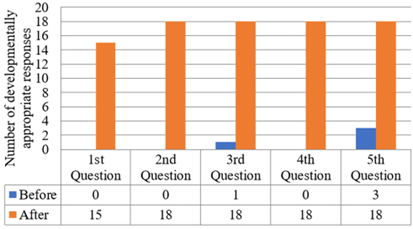
This descriptive pattern is consistent with the qualitative findings presented above. Overall, the post-intervention responses were more relevant to the questions, more environmentally grounded, and more clearly connected to the main themes addressed during the educational program.
Parent Observations
To explore whether the children’s engagement with environmental issues extended beyond the classroom, both student responses and parental observations were examined. As a supplementary post-intervention prompt used for comparison with parental observations, children were also asked, “What actions will you take from now on to protect the earth from overheating?” and parents were asked, “Have you noticed increased interest from your child regarding the impacts of climate change (melting ice, extreme weather events, global warming)?” Table 3 presents the paired student and parent responses.
Table 3. Summary of student responses and parental observations
|
The children’s responses indicate that many were able to name practical everyday actions such as recycling, turning off unnecessary lights, using bicycles, avoiding littering, and reducing car use. Examples include: “I will recycle and use fewer cars,” “I’ll turn off unnecessary lights,” and “Ride a bicycle and avoid polluting the sea and forests.” These responses suggest that the intervention supported the expression of simple and concrete forms of environmental responsibility.
The parent reports offer additional descriptive support for this pattern. Many parents noted increased interest, curiosity, or discussion at home regarding melting ice, endangered animals, rising temperatures, pollution, and global warming. In some cases, parents also described further engagement through drawing or attention to environmental messages in the media. For example, one parent reported that the child had created drawings at home showing the earth’s thermometer and melting ice, while another noted that the child had started paying attention to relevant television advertisements.
Not all parents reported clear post-intervention changes, and these observations should be interpreted cautiously. Nevertheless, the parent reports suggest that, for many children, the classroom experience continued beyond school through conversations, expressions, and everyday environmental references in the home setting.
DISCUSSION
The findings of this study suggest that an experiential, play-based educational intervention can support preschool children’s environmental awareness and emerging understanding of climate change when the topic is introduced in developmentally appropriate ways. Following the intervention, the children’s responses became more specific, more environmentally grounded, and more closely connected to human activity, environmental consequences, and simple forms of action. This pattern is consistent with previous research showing that young children can engage meaningfully with environmental issues when these are approached through concrete and participatory learning experiences (Borg et al., 2019; Liu & Green, 2024; Mliless et al., 2024; Spiteri, 2022, 2023b). It also aligns with more recent studies suggesting that preschool children can express early forms of ecological awareness, care, and responsibility when environmental content is made accessible to their developmental level (Mousavi et al., 2024; Sihvonen et al., 2024).
An important strength of the present study is that it clarifies the connection between the experiential and play-based framework and the actual design of the intervention. In the present case, climate-related ideas were not introduced through abstract explanation alone. Instead, they were approached through educational videos, guided discussions, collaborative group projects, hands-on experiments and demonstrations, artistic representations, and recycling and renewable energy activities. These components reflect key principles of experiential and play-based learning because they engage children through observation, participation, dialogue, symbolic expression, and practical action. This interpretation is consistent with scholarship arguing that early childhood environmental education is most effective when learning is grounded in concrete, relational, and participatory pedagogies rather than in the transmission of abstract information (Barratt Hacking et al., 2007; Cutter-Mackenzie & Edwards, 2013; Edwards et al., 2014). It also agrees with more recent work emphasizing the importance of children’s agency, play, and participation in sustainability-oriented early childhood education (Kahriman-Pamuk & Borg, 2024).
The findings also resonate with research on early climate cognition. Before the intervention, many children responded with uncertainty, imaginative associations, or everyday meanings of the word change. After the intervention, they more often linked climate change to cars, factories, pollution, heat, melting ice, and floods. Even so, their understandings remained simplified and strongly tied to visible and familiar examples. This pattern is developmentally plausible. Preschool-aged children typically reason through immediate, concrete, and sensory experiences rather than abstract systems or long-term causal chains (Fleer & Hedegaard, 2010; Piaget, 1952). For this reason, the value of early climate education should not be judged by whether children achieve complete scientific understanding. Rather, it should be understood as fostering developmentally appropriate forms of awareness, emerging causal reasoning, and emotional connection to environmental issues (Brush et al., 2022; Nusche et al., 2024; Saracho, 2023; Trott, 2020).
The study also suggests that the effects of such learning may extend beyond the classroom. Many parents reported that their children discussed melting ice, endangered animals, pollution, or global warming at home. Some also described related drawings or references to environmental messages in the media. Although these reports are limited and subjective, they are consistent with earlier research suggesting that young children can influence family conversations and practices around environmental issues (Ebrahim, 2011; von Braun, 2017). More recent reviews likewise emphasize that children can act as agents of change within their households and communities when environmental learning becomes meaningful to them (Hosany et al., 2022; Séraphin, 2022; Sorbring & Kuczynski, 2018). The parent reports in the present study therefore provide preliminary support for the idea that early childhood environmental education may have a relational reach beyond school, even if such influence should not be overstated.
At the same time, the findings should be interpreted cautiously. The post-interviews were conducted immediately after the intervention, when the children’s memory of the activities was still fresh. This means that the study primarily captures short-term responses rather than stable conceptual development. The findings therefore indicate immediate post-intervention shifts in children’s talk and understanding, but they do not demonstrate long-term retention. This limitation is important because early changes in vocabulary or explanation do not necessarily translate into stable knowledge or sustained behavior over time. Previous research suggests that repeated and sustained experiences are important for shaping longer-term pro-environmental orientations (Spiteri, 2020; Tucker & Izadpanahi, 2017; Yan et al., 2025; Zsóka et al., 2013). Liefländer and Bogner (2014) further showed that younger children may be especially responsive to environmental programs, which strengthens the rationale for early intervention, but also highlights the need for continuity rather than one-off exposure.
Another important issue concerns the emotional dimension of climate education. The broader literature has shown that climate-related topics may evoke fear, confusion, or eco-anxiety, especially if they are presented in alarming ways (Burke et al., 2018; Hickman et al., 2021; Ojala, 2012, 2016; Pihkala, 2020). In the present study, the intervention was designed to encourage constructive engagement by emphasizing participation, discussion, concrete examples, and simple actions rather than fear-based messaging. However, children’s emotional responses, sense of agency, and possible anxiety were not examined systematically as distinct analytical categories. For this reason, the present study cannot make strong claims about the emotional effects of the intervention. What it can suggest is that an action-oriented and supportive pedagogical approach may offer a productive direction for early climate education, one that helps children engage without being overwhelmed.
A related issue concerns scientific misconceptions. The intervention appeared to help children connect climate change with pollution, heat, melting ice, and human responsibility, but it did not examine in depth how specific misconceptions emerged, changed, or persisted. This is especially relevant in climate education, where simplified explanations, although developmentally necessary, may also lead children to form incomplete or inaccurate models of climate-related processes. The present study therefore contributes more to understanding how young children begin to talk about climate change than to demonstrating mastery of climate science. Future research would benefit from examining how age-appropriate climate science content can be introduced more systematically in order to support understanding while reducing oversimplification or misunderstanding.
Taken together, the findings support a modest but important conclusion: climate change education in the preschool years is feasible and pedagogically meaningful when it is framed through experiential and play-based learning. The study does not suggest that young children can fully grasp the complexity of climate change. Rather, it suggests that they can begin to develop developmentally appropriate understandings of environmental change, human responsibility, and simple mitigation practices. In this sense, the study contributes not only practical evidence from an applied intervention, but also a clearer illustration of how experiential and play-based principles can be translated into climate-related educational practice in early childhood settings.
CONCLUSIONS
This study indicates that climate change and environmental education can be introduced meaningfully in preschool through an experiential, play-based intervention. The findings suggest that children aged 4-6 years can develop more developmentally appropriate understandings of climate-related ideas, including human responsibility, selected environmental impacts, and simple everyday responses, when learning is grounded in concrete, participatory, and age-appropriate activities.
A second key conclusion concerns pedagogical value. In this study, educational videos, guided discussions, collaborative group projects, hands-on experiments and demonstrations, artistic representations, and recycling and renewable energy activities appeared to help make abstract environmental ideas more visible, tangible, and meaningful for young children. This suggests that the value of early climate education lies not only in what is taught, but also in how it is taught.
At the same time, the study remains exploratory. It points to the feasibility of early childhood climate education and to the potential of experiential pedagogy, but it also highlights the need for further research on long-term learning, emotional responses, and the development of more structured age-appropriate climate science content.
Limitations
Several limitations should be acknowledged. First, the study involved a small convenience sample of 18 children from a single public kindergarten in Greece. The findings are therefore context-specific and cannot be generalized beyond this setting without caution. The sociocultural and educational characteristics of this particular context may have influenced both the intervention process and the children’s responses.
Second, the study relied primarily on qualitative data, including child interviews and parental observations. These methods were appropriate for the age of the participants and the exploratory aims of the study, but they also involve interpretive challenges. Young children’s verbal expressions are often brief, symbolic, or context-dependent, which increases the possibility of researcher over-interpretation. In addition, the parental observations offered useful complementary insight, but they were subjective and were not based on a standardized instrument.
Third, the post-interviews were conducted immediately after the intervention. As a result, the study captures short-term post-intervention responses rather than long-term conceptual retention or sustained behavioral change. It therefore remains unclear whether the observed changes would persist over time.
Fourth, formal inter-rater reliability was not calculated. Although the inductive qualitative content analysis was conducted systematically and reflexively, the interpretation of the data may still have been influenced by researcher assumptions and analytic decisions.
Finally, some important dimensions were beyond the scope of the study. The research did not examine children’s emotional responses, climate-related anxiety, or sense of agency in a systematic way. Nor did it investigate in depth how specific scientific misconceptions were reduced, maintained, or transformed through the intervention.
Recommendations and Future Research
The findings suggest that environmental and climate education can be meaningfully incorporated into early childhood settings when content is presented through concrete, participatory, and developmentally appropriate pedagogy. In practice, this means that preschool educators may be better supported by approaches that combine visual materials, guided discussion, collaborative creation, hands-on experimentation, artistic expression, and practical sustainability activities rather than abstract explanation alone. Early climate education should aim to foster foundational awareness, care, and simple forms of action while remaining sensitive to children’s developmental stage.
At the policy level, the study supports the inclusion of environmental and climate-related learning within early childhood curricula as an integrated and developmentally appropriate area rather than as an occasional or isolated topic. This also implies a need for stronger support for early childhood educators through professional development, pedagogical resources, and curriculum guidance that help them address climate-related issues with confidence and sensitivity.
Future research should build on the present study in several ways. First, larger studies across multiple preschool settings are needed to examine whether similar patterns emerge in different educational and cultural contexts. Second, longitudinal research is especially important in order to explore whether the changes observed immediately after the intervention are sustained over time. Third, future studies should investigate more directly how early climate education can support children’s sense of agency while avoiding fear or emotional burden. Finally, more research is needed on how age-appropriate climate science content can be designed to reduce misconceptions and support progressively richer understanding in the early years.
Author contributions: All authors sufficiently contributed to this study and agreed with the results and conclusions.
Funding: No funding source is reported for this study.
Ethical statement: The authors stated that ethical approval was obtained by institutional and national guidelines for research involving human participants. Prior to the start of the study, written informed consent was obtained from all parents or legal guardians of the participating children. In addition, verbal assent was obtained from the children, and participation was entirely voluntary. Children were informed that they could stop participating at any time without consequence. All data were collected and analyzed with strict attention to confidentiality and protecting participants’ rights.
AI statement: The authors declared that AI-based tools were used exclusively for linguistic revision and stylistic refinement. The literature selection, critical synthesis, interpretation, and all conclusions are solely the authors’ responsibility.
Declaration of interest: No conflict of interest is declared by the authors.
Data sharing statement: Data supporting the findings and conclusions are available upon request from the corresponding author.
References
- Abbass, K., Qasim, M. Z., Song, H., Murshed, M., Mahmood, H., & Younis, I. (2022). A review of the global climate change impacts, adaptation, and sustainable mitigation measures. Environmental Science and Pollution Research, 29(28), 42539-42559. https://doi.org/10.1007/s11356-022-19718-6
- Abo-Khalil, A. G. (2024). Integrating sustainability into higher education challenges and opportunities for universities worldwide. Heliyon, 10(9), Article e29946. https://doi.org/10.1016/j.heliyon.2024.e29946
- Adamowski, J. F., Chew, C., Wals, A., Mayer, I., & Medema, W. (Eds.). (2020). Understanding game-based approaches for improving sustainable water governance: The potential of serious games to solve water problems. MDPI. https://doi.org/10.3390/books978-3-03928-763-5
- Adger, W. N., Quinn, T., Lorenzoni, I., Murphy, C., & Sweeney, J. (2013). Changing social contracts in climate-change adaptation. Nature Climate Change, 3(4), 330-333. https://doi.org/10.1038/nclimate1751
- Adom, P. K. (2024). The socioeconomic impact of climate change in developing countries over the next decades: A literature survey. Heliyon, 10(15), Article e35134. https://doi.org/10.1016/j.heliyon.2024.e35134
- Aksit, F. (2012). Clarification of selected misconceptions in climate topic. Procedia-Social and Behavioral Sciences, 46, 4363-4368. https://doi.org/10.1016/j.sbspro.2012.06.255
- Alderson, P., & Morrow, V. (2011). The ethics of research with children and young people: A practical handbook. SAGE. https://doi.org/10.4135/9781446268377
- Alkair, S., Ali, R., Abouhashem, A., Aledamat, R., Bhadra, J., Ahmad, Z., Sellami, A., & Al-Thani, N. J. (2023). A STEM model for engaging students in environmental sustainability programs through a problem-solving approach. Applied Environmental Education & Communication, 22(1), 13-26. https://doi.org/10.1080/1533015X.2023.2179556
- Anderson, A. (2012). Climate change education for mitigation and adaptation. Journal of Education for Sustainable Development, 6(2), 191-206. https://doi.org/10.1177/0973408212475199
- Ardoin, N. M., & Bowers, A. W. (2020). Early childhood environmental education: A systematic review of the research literature. Educational Research Review, 31, Article 100353. https://doi.org/10.1016/j.edurev.2020.100353
- Baker, E. (2024). Ethical implications of environmental policies and practices. International Journal of Philosophy, 3(1), 37-40. https://doi.org/10.47941/ijp.1868
- Ballantyne, R., Fien, J., & Packer, J. (2001). Program effectiveness in facilitating intergenerational influence in environmental education: Lessons from the field. The Journal of Environmental Education, 32(4), 8-15. https://doi.org/10.1080/00958960109598657
- Barrable, A., & Booth, D. (2020). Increasing nature connection in children: A mini review of interventions. Frontiers in Psychology, 11. https://doi.org/10.3389/fpsyg.2020.00492
- Barratt Hacking, E., Barratt, R., & Scott, W. (2007). Engaging children: Research issues around participation and environmental learning. Environmental Education Research, 13(4), 529-544. https://doi.org/10.1080/13504620701600271
- Beasy, K., Jones, C., Kelly, R., Lucas, C., Mocatta, G., Pecl, G., & Yildiz, D. (2023). The burden of bad news: Educators’ experiences of navigating climate change education. Environmental Education Research, 29(11), 1678-1691. https://doi.org/10.1080/13504622.2023.2238136
- Beaver, B. C., & Borgerding, L. A. (2023). Climate change education in early childhood classrooms: A nature-based approach. International Journal of Early Childhood Environmental Education, 11(1), 3-19.
- Beckmann, J., & Winkelmann, R. (2023). Effects of extreme melt events on ice flow and sea level rise of the Greenland Ice Sheet. The Cryosphere, 17(7), 3083-3099. https://doi.org/10.5194/tc-17-3083-2023
- Bhattacharya, D., Carroll Steward, K., & Forbes, C. T. (2021). Empirical research on K-16 climate education: A systematic review of the literature. Journal of Geoscience Education, 69(3), 223-247. https://doi.org/10.1080/10899995.2020.1838848
- Bilgili, M., Tumse, S., & Nar, S. (2024). Comprehensive overview on the present state and evolution of global warming, climate change, greenhouse gasses and renewable energy. Arabian Journal for Science and Engineering, 49(11), 14503-14531. https://doi.org/10.1007/s13369-024-09390-y
- Borg, C., Gericke, N., Höglund, H.-O., & Bergman, E. (2014). Subject- and experience-bound differences in teachers’ conceptual understanding of sustainable development. Environmental Education Research, 20(4), 526-551. https://doi.org/10.1080/13504622.2013.833584
- Borg, F., Winberg, T. M., & Vinterek, M. (2019). Preschool children’s knowledge about the environmental impact of various modes of transport. Early Child Development and Care, 189(3), 376-391. https://doi.org/10.1080/03004430.2017.1324433
- Broadhead, P., & Burt, A. (2012). Understanding young children’s learning through play: Building playful pedagogies. Routledge. https://doi.org/10.4324/9780203156346
- Brody, M. J. (1993). Student understanding of water and water resources: A review of the literature. ERIC. https://eric.ed.gov/?id=ED361230
- Brown, D. A. (2001). The ethical dimensions of global environmental issues. Deadalus. https://papers.ssrn.com/abstract=2304395
- Brown, D. D. (2008). The use of causal connections by young children: Implications for school readiness. NHSA Dialog, 11(1), 44-53. https://doi.org/10.1080/15240750701831909
- Brush, K. E., Jones, S. M., Bailey, R., Nelson, B., Raisch, N., & Meland, E. (2022). Social and emotional learning: From conceptualization to practical application in a global context. In J. DeJaeghere, & E. Murphy-Graham (Eds.), Life skills education for youth: Critical perspectives (pp. 43-71). Springer. https://doi.org/10.1007/978-3-030-85214-6_3
- Bubikova-Moan, J., Næss Hjetland, H., & Wollscheid, S. (2019). ECE teachers’ views on play-based learning: A systematic review. European Early Childhood Education Research Journal, 27(6), 776-800. https://doi.org/10.1080/1350293X.2019.1678717
- Burke, S. E. L., Sanson, A. V., & Van Hoorn, J. (2018). The psychological effects of climate change on children. Current Psychiatry Reports, 20(5), Article 35. https://doi.org/10.1007/s11920-018-0896-9
- Catucci, E., Berg, B., & Ärlemalm-Hagsér, E. (2024). ‘There are plenty of opportunities for play and learning’–Swedish preschool teachers’ perspectives on using the outdoor environment as a pedagogical resource. Cogent Education, 11(1), Article 2369971. https://doi.org/10.1080/2331186X.2024.2369971
- Chawla, L. (2008). Participation and the ecology of environmental awareness and action. In A. Reid, B. B. Jensen, J. Nikel, & V. Simovska (Eds.), Participation and learning (pp. 98-110). Springer. https://doi.org/10.1007/978-1-4020-6416-6_6
- Chawla, L., & Cushing, D. F. (2007). Education for strategic environmental behavior. Environmental Education Research, 13(4), 437-452. https://doi.org/10.1080/13504620701581539
- Chen, L., Gao, J., & Vahid, F. (2022). Global temperatures and greenhouse gases: A common features approach. Journal of Econometrics, 230(2), 240-254. https://doi.org/10.1016/j.jeconom.2021.04.003
- Christensen, P. M., & James, A. (Eds.). (2017). Research with children: Perspectives and practices (3rd ed.). Routledge.
- Christoforaki, M., Skoufoglou, M., Koutra-Iliopoulou, M., Chatzara, E., Mavrikaki, E., & Galani, A. (2025). Teachers’ misconceptions about heatwaves and their interconnections with climate change. International Research in Geographical and Environmental Education. https://doi.org/10.1080/10382046.2025.2485916
- Covitt, B. A., Gunckel, K. L., & Anderson, C. W. (2009). Students’ developing understanding of water in environmental systems. The Journal of Environmental Education, 40(3), 37-51. https://doi.org/10.3200/JOEE.40.3.37-51
- Cutter-Mackenzie, A., & Edwards, S. (2013). Toward a model for early childhood environmental education: Foregrounding, developing, and connecting knowledge through play-based learning. The Journal of Environmental Education, 44(3), 195-213. https://doi.org/10.1080/00958964.2012.751892
- Cutter-Mackenzie-Knowles, A., Malone, K., & Barratt Hacking, E. (2020). Childhoodnature: An assemblage adventure. In A. Cutter-Mackenzie-Knowles, K. Malone, & E. Barratt Hacking (Eds.), Research handbook on childhoodnature: Assemblages of childhood and nature research (pp. 1-15). Springer. https://doi.org/10.1007/978-3-319-67286-1_2
- Davis, J. (2009). Revealing the research ‘hole’ of early childhood education for sustainability: A preliminary survey of the literature. Environmental Education Research, 15(2), 227-241. https://doi.org/10.1080/13504620802710607
- Davis, J., & Elliott, S. (Eds.). (2014). Research in early childhood education for sustainability: International perspectives and provocations. Routledge. https://doi.org/10.4324/9781315767499
- Derviş, K. (2007). Devastating for the world’s poor: Climate change threatens the development gains already achieved. United Nations Development Program. https://www.uncclearn.org/wp-content/uploads/library/undp30.pdf
- Devecchi, M., Dagnino, E., Milelli, M., Soini, K., & Parodi, A. (2025). Climate change education in a secondary school, the i-CHANGE project approach. European Journal of Education, 60(1), Article e12875. https://doi.org/10.1111/ejed.12875
- Douglas, F., Beasy, K., Sollis, K., & Flies, E. J. (2024). Online, experiential sustainability education can improve students’ self-reported environmental attitudes, behaviors and wellbeing. Sustainability, 16(6), Article 2258. https://doi.org/10.3390/su16062258
- Dündar-Coecke, S., Tolmie, A., & Schlottmann, A. (2021). The development of spatial-temporal, probability, and covariation information to infer continuous causal processes. Frontiers in Psychology, 12. https://doi.org/10.3389/fpsyg.2021.525195
- Ebrahim, H. (2011). Children as agents in early childhood education. Education as Change, 15(1), 121-131. https://doi.org/10.1080/16823206.2011.568947
- Edwards, S., Cutter-Mackenzie, A., Moore, D., & Boyd, W. (2014). A challenge reconsidered: Play-based learning in early childhood environmental education. In A. Cutter-Mackenzie, S. Edwards, D. Moore, & W. Boyd (Eds.), Young children’s play and environmental education in early childhood education (pp. 75-81). Springer. https://doi.org/10.1007/978-3-319-03740-0_7
- Elliott, S., & Davis, J. (2009). Exploring the resistance: An Australian perspective on educating for sustainability in early childhood. International Journal of Early Childhood, 41(2), 65-77. https://doi.org/10.1007/BF03168879
- Ernst, J., & Monroe, M. (2004). The effects of environment-based education on students’ critical thinking skills and disposition toward critical thinking. Environmental Education Research, 10(4), 507-522. https://doi.org/10.1080/1350462042000291038
- Ernst, J., & Theimer, S. (2011). Evaluating the effects of environmental education programming on connectedness to nature. Environmental Education Research, 17(5), 577-598. https://doi.org/10.1080/13504622.2011.565119
- Fägerstam, E., & Samuelsson, J. (2014). Learning arithmetic outdoors in junior high school–influence on performance and self-regulating skills. Education 3-13, 42(4), 419-431. https://doi.org/10.1080/03004279.2012.713374
- Feigin, S. V., Wiebers, D. O., Blumstein, D. T., Knight, A., Eshel, G., Lueddeke, G., Kopnina, H., Feigin, V. L., Morand, S., Lee, K., Brainin, M., Shackelford, T. K., Alexander, S. M., Marcum, J., Merskin, D., Skerratt, L. F., Van Kleef, G. A., Whitfort, A., Freeman, C. P., & Winkler, A. S. (2025). Solving climate change requires changing our food systems. Oxford Open Climate Change, 5(1), Article kgae024. https://doi.org/10.1093/oxfclm/kgae024
- Fleer, M., & Hedegaard, M. (2010). Early learning and development: Cultural-historical concepts in play. Cambridge University Press. https://doi.org/10.1017/CBO9780511844836
- Fyffe, L., & Lewis, A. (2024). Does play-based learning support children’s everyday resiliency? A cross-case analysis of parents’ and kindergarten teachers’ perceptions of play-based learning as a precedent to young children’s coping during the pandemic-affected 2020-2021 school year. Children, 11(11), Article 1378. https://doi.org/10.3390/children11111378
- Galway, L. P., & Field, E. (2023). Climate emotions and anxiety among young people in Canada: A national survey and call to action. The Journal of Climate Change and Health, 9, Article 100204. https://doi.org/10.1016/j.joclim.2023.100204
- García-Vinuesa, A., Meira-Cartea, P. Á., & Caride-Gómez, J. A. (2024). Climate change education and secondary school students: A meta-synthesis (1993-2017). Education in the Knowledge Society, 25, Article e31358. https://doi.org/10.14201/eks.31358
- Gavrilas, L., & Kotsis, K. T. (2024). Electromagnetic radiation: A comprehensive review of misconceptions. Eurasian Journal of Science and Environmental Education, 4(2), 19–38. https://doi.org/10.30935/ejsee/15719
- Gavrilas, L., & Kotsis, K. T. (2025). Development and validation of a survey instrument towards attitude, knowledge, and application of educational robotics (Akaer). International Journal of Research & Method in Education, 48(1), 44–66. https://doi.org/10.1080/1743727X.2024.2358780
- Gavrilas, L., Papanikolaou, M.-S., & Kotsis, K. T. (2024). The views of preschool educators on the development of environmental awareness through distance education. Interdisciplinary Journal of Environmental and Science Education, 20(3), Article e2411. https://doi.org/10.29333/ijese/14656
- Gavrilas, L., Papanikolaou, M.-S., & Kotsis, K. T. (2025). Exploring electricity in early childhood education: A 5E-based learning approach. Science Activities, 62(1), 53–94. https://doi.org/10.1080/00368121.2024.2406208
- Georgopoulos, A., Birbili, M., & Dimitriou, A. (2011). Environmental education (EE) and experiential education: A promising “marriage” for Greek pre-school teachers. Creative Education, 2(2), 114-120. https://doi.org/10.4236/ce.2011.22016
- Ginsburg, J. L., & Audley, S. (2020). ‘You don’t wanna teach little kids about climate change’: Beliefs and barriers to sustainability education in early childhood. International Journal of Early Childhood Environmental Education, 7(3), 42-61.
- Gontas, P., Gavrilas, L., & Kotsis, K. (2021). Prospective teachers’ perceptions of renewable energy sources. Issues in Science and Technology in Education, 14, 37-48. https://doi.org/10.12681/thete.39957
- Gontas, P., Gavrilas, L., & Kotsis, K. T. (2020). The impact of gender on university students’ perceptions about renewable energy sources. Science Teaching: Research and Praxis, 74-75, 9-24.
- Grindheim, L. T., Bakken, Y., Hauge, K. H., & Heggen, M. P. (2019). Early childhood education for sustainability through contradicting and overlapping dimensions. ECNU Review of Education, 2(4), 374-395. https://doi.org/10.1177/2096531119893479
- Güler Yıldız, T., Öztürk, N., İlhan İyi, T., Aşkar, N., Banko Bal, Ç., Karabekmez, S., & Höl, Ş. (2021). Education for sustainability in early childhood education: A systematic review. Environmental Education Research, 27(6), 796-820. https://doi.org/10.1080/13504622.2021.1896680
- Hägglund, S., & Samuelsson, I. P. (2009). Early childhood education and learning for sustainable development and citizenship. International Journal of Early Childhood, 41(2), 49-63. https://doi.org/10.1007/BF03168878
- Hampton, S., & Whitmarsh, L. (2023). Choices for climate action: A review of the multiple roles individuals play. One Earth, 6(9), 1157-1172. https://doi.org/10.1016/j.oneear.2023.08.006
- Hansen, J. E., Kharecha, P., Sato, M., Tselioudis, G., Kelly, J., Bauer, S. E., Ruedy, R., Jeong, E., Jin, Q., Rignot, E., Velicogna, I., Schoeberl, M. R., Von Schuckmann, K., Amponsem, J., Cao, J., Keskinen, A., Li, J., & Pokela, A. (2025). Global warming has accelerated: Are the United Nations and the public well-informed? Environment: Science and Policy for Sustainable Development, 67(1), 6-44. https://doi.org/10.1080/00139157.2025.2434494
- Hayes, J. C., & Kraemer, D. J. M. (2017). Grounded understanding of abstract concepts: The case of STEM learning. Cognitive Research: Principles and Implications, 2(1), Article 7. https://doi.org/10.1186/s41235-016-0046-z
- Hedefalk, M., Almqvist, J., & Östman, L. (2015). Education for sustainable development in early childhood education: A review of the research literature. Environmental Education Research, 21(7), 975-990. https://doi.org/10.1080/13504622.2014.971716
- Henderson, R., & Serafeim, G. (2020). Tackling climate change requires organizational purpose. AEA Papers and Proceedings, 110, 177-180. https://doi.org/10.1257/pandp.20201067
- Hickman, C., Marks, E., Pihkala, P., Clayton, S., Lewandowski, R. E., Mayall, E. E., Wray, B., Mellor, C., & Van Susteren, L. (2021). Climate anxiety in children and young people and their beliefs about government responses to climate change: A global survey. The Lancet Planetary Health, 5(12), e863-e873. https://doi.org/10.1016/S2542-5196(21)00278-3
- Hoekstra, A. G., Noordzij, K., De Koster, W., & Van Der Waal, J. (2024). The educational divide in climate change attitudes: Understanding the role of scientific knowledge and subjective social status. Global Environmental Change, 86, Article 102851. https://doi.org/10.1016/j.gloenvcha.2024.102851
- Hosany, A. R. S., Hosany, S., & He, H. (2022). Children sustainable behaviour: A review and research agenda. Journal of Business Research, 147, 236-257. https://doi.org/10.1016/j.jbusres.2022.04.008
- INEE. (2023). Promoting climate-sensitive early childhood care and education in emergencies. Inter-Agency Network for Education in Emergencies. https://inee.org/resources/promoting-climate-sensitive-early-childhood-care-and-education-emergencies
- IPCC. (2022). Global warming of 1. 5 °C: IPCC special report on impacts of global warming of 1.5 °C above pre-industrial levels in context of strengthening response to climate change, sustainable development, and efforts to eradicate poverty. Cambridge University Press. https://doi.org/10.1017/9781009157940
- IPCC. (2023). Climate change 2023: Synthesis report. Intergovernmental Panel on Climate Change. https://www.ipcc.ch/report/ar6/syr/
- Jimenez Gomez Tagle, M., & Vito, D. (2024). How eco-anxiety is affected by community health status and climate justice determinants: An exploratory study in young population. In Proceedings of the 2nd International One Health Conference. https://doi.org/10.3390/msf2024025015
- Kahriman-Pamuk, D., & Borg, F. (2024). Sustainability, play and children’s agency: A comparative study of the Swedish and Turkish preschool curricula. European Early Childhood Education Research Journal, 33(4), 659-675. https://doi.org/10.1080/1350293X.2024.2415948
- Kalogiannakis, M., Papadakis, S., & Zourmpakis, A.-I. (2021). Gamification in science education. A systematic review of the literature. Education Sciences, 11(1), Article 22. https://doi.org/10.3390/educsci11010022
- Karataş, A. (2014). Environmental ethics education as a tool for the prevention of environmental problems in the community. European Journal of Sustainable Development, 3(4), 263-263.
- Kaufman, D. G., & Eshbaugh, S. H. (1996). Hands-on environmental education activities for k-6 teachers. Kendall/Hunt Publishing Company.
- Kharrazi, A., Kudo, S., & Allasiw, D. (2018). Addressing misconceptions to the concept of resilience in environmental education. Sustainability, 10(12), Article 4682. https://doi.org/10.3390/su10124682
- Kolenatý, M., Kroufek, R., & Činčera, J. (2022). What triggers climate action: The impact of a climate change education program on students’ climate literacy and their willingness to act. Sustainability, 14(16), Article 10365. https://doi.org/10.3390/su141610365
- Kotsis, K. T., & Gavrilas, L. (2025). Review of scientific literacy of pre-service teachers on electromagnetic radiation. European Journal of Contemporary Education and E-Learning, 3(1), 55–64. https://doi.org/10.59324/ejceel.2025.3(1).05
- Kundariati, M., Ibrohim, I., Rohman, F., & Nida, S. (2025). Navigating climate change education: A problem-oriented project-based learning in secondary schools. Science Activities, 62(2), 156-170. https://doi.org/10.1080/00368121.2025.2463653
- Lamanauskas, V. (2023). The importance of environmental education at an early age. Journal of Baltic Science Education, 22(4), 564-567. https://doi.org/10.33225/jbse/23.22.564
- Lammel, A. (2025). Environmental crises and climate change: Eco-anxiety among young people and the urgent need for a transformative response. The Journal of Field Actions, (Special Issue 27), 42-46. https://doi.org/10.4324/9781003506850-5
- Lammert, C. (2024). Elementary teacher candidates’ views of children’s literature on climate change. Education Sciences, 14(8), Article 843. https://doi.org/10.3390/educsci14080843
- Langevin, J., Harris, C. B., & Reyna, J. L. (2019). Assessing the potential to reduce U. S. Building CO2 emissions 80% by 2050. Joule, 3(10), 2403-2424. https://doi.org/10.1016/j.joule.2019.07.013
- Lawson, D. F., Stevenson, K. T., Peterson, M. N., Carrier, S. J., L. Strnad, R., & Seekamp, E. (2019). Children can foster climate change concern among their parents. Nature Climate Change, 9(6), 458-462. https://doi.org/10.1038/s41558-019-0463-3
- Léger-Goodes, T., Malboeuf-Hurtubise, C., Mastine, T., Généreux, M., Paradis, P.-O., & Camden, C. (2022). Eco-anxiety in children: A scoping review of the mental health impacts of the awareness of climate change. Frontiers in Psychology, 13. https://doi.org/10.3389/fpsyg.2022.872544
- Liefländer, A. K., & Bogner, F. X. (2014). The effects of children’s age and sex on acquiring pro-environmental attitudes through environmental education. The Journal of Environmental Education, 45(2), 105-117. https://doi.org/10.1080/00958964.2013.875511
- Liefländer, A. K., Fröhlich, G., Bogner, F. X., & Schultz, P. W. (2013). Promoting connectedness with nature through environmental education. Environmental Education Research, 19(3), 370-384. https://doi.org/10.1080/13504622.2012.697545
- Lieung, K. W., Rahayu, D. P., Fredy, & Sulili, A. (2019). The influence of scientific approach on environmental problem-solving skills in elementary school students. IOP Conference Series: Earth and Environmental Science, 343, Article 012173. https://doi.org/10.1088/1755-1315/343/1/012173
- Liu, J., & Green, R. J. (2024). Children’s pro-environmental behaviour: A systematic review of the literature. Resources, Conservation and Recycling, 205, Article 107524. https://doi.org/10.1016/j.resconrec.2024.107524
- Manja, S. A., Masnan, A. H., Che Mustafa, M., & Moktar, S. (2024). Multi-sensory activity in early childhood education: The barriers to implementation of activities by teachers. Jurnal Pendidikan Awal Kanak-kanak Kebangsaan, 13(2), 16-25. https://doi.org/10.37134/jpak.vol13.2.2.2024
- Meier, D., & Sisk-Hilton, S. (2017). Nature and environmental education in early childhood. The New Educator, 13(3), 191-194. https://doi.org/10.1080/1547688X.2017.1354646
- Milakovich, J., Simonds, V. W., Held, S., Picket, V., LaVeaux, D., Cummins, J., Martin, C., & Kelting-Gibson, L. (2018). Children as agents of change: Parent perceptions of child-driven environmental health communication in the crow community. Journal of Health Disparities Research and Practice, 11(3), 115-127.
- Mliless, M., Larouz, M., Forte, D. L., Halawachy, H. F., Handoko, H., & Vande-Guma, C. D. S. (Eds.). (2024). Environmental awareness in preschool children’s drawings: A global perspective (1st ed.). Springer. https://doi.org/10.1007/978-3-031-59910-1
- Mokhele-Ramulumo, M., Adekola, O. A., & Phala, T. (2025). Exploring children’s emotional responses to pollution: Implications for environmental education. Journal of Early Childhood Education Research, 14(1), 28-46. https://doi.org/10.58955/jecer.147025
- Moshou, H., & Drinia, H. (2023). Climate change education and preparedness of future teachers—A review: The case of Greece. Sustainability, 15(2), Article 1177. https://doi.org/10.3390/su15021177
- Mousavi, N., Ahmadi, S., Sharifian Sani, M., Irandoost, S. F., Mohammadi Gharehghani, M. A., & Abdolhai, Z. (2024). Identifying environmental education strategies for children with an emphasis on children under four years old: A qualitative study in Iran. Heliyon, 10(17), Article e37161. https://doi.org/10.1016/j.heliyon.2024.e37161
- Muccione, V., Ewen, T., & Vaghefi, S. A. (2025). A scoping review on climate change education. PLOS Climate, 4(1), Article e0000356. https://doi.org/10.1371/journal.pclm.0000356
- Nusche, D., Fuster Rabella, M., & Lauterbach, S. (2024). Rethinking education in the context of climate change: Leverage points for transformative change. OECD Publishing. https://doi.org/10.1787/f14c8a81-en
- O’Hara, D. P., & Abelsohn, A. (2011). Ethical response to climate change. Ethics and the Environment, 16(1), 25-55. https://doi.org/10.2979/ethicsenviro.16.1.25
- OECD. (2023). Early childhood education and care (ECEC) program. Organisation for Economic Co-operation and Development. https://www.oecd.org/en/about/programmes/early-childhood-education-and-care-ecec.html
- Ohlsson, A., Niklas Gericke, & Farhana Borg. (2022). Integration of education for sustainability in the preschool curriculum: A comparative study between the two latest Swedish curricula. Journal of Childhood, Education & Society, 3(1), 12-27. https://doi.org/10.37291/2717638X.202231130
- Öhman, J. (2016). New ethical challenges within environmental and sustainability education. Environmental Education Research, 22(6), 765-770. https://doi.org/10.1080/13504622.2016.1165800
- Ojala, M. (2012). Hope and climate change: The importance of hope for environmental engagement among young people. Environmental Education Research, 18(5), 625-642. https://doi.org/10.1080/13504622.2011.637157
- Ojala, M. (2016). Facing anxiety in climate change education: From therapeutic practice to hopeful transgressive learning. Canadian Journal of Environmental Education, 21, 41-56.
- Ozturk, E. (2023). Scientific studies on climate change, children and education: Current situation and suggestions. Journal of Education in Science, Environment and Health, 9(1), 16-28. https://doi.org/10.55549/jeseh.1231249
- Palmberg, I. E., & Kuru, J. (2000). Outdoor activities as a basis for environmental responsibility. The Journal of Environmental Education, 31(4), 32-36. https://doi.org/10.1080/00958960009598649
- Palmer, J. A. (1995). Environmental thinking in the early years: Understanding and misunderstanding of concepts related to waste management. Environmental Education Research, 1(1), 35-45. https://doi.org/10.1080/1350462950010103
- Papanikolaou, M.-S., Gavrilas, L., & Kotsis, K. T. (2024). Enhancing preschool children’s understanding of water pollution through an educational intervention. Proceedings of the Panhellenic Conference on Science Education and New Technologies in Education, 13, 1007–1013. https://doi.org/10.12681/codiste.7046
- Papanikolaou, M.-S., Gavrilas, L., & Plakitsi, K. (2020). Development of environmental consciousness among preschool students through distance learning. In K. Plakitsi (Ed.), Proceedings of the 11th Panhellenic Conference on Physical Sciences in Preschool Education: Mapping the New Twenty Years of Research and Teaching Practice (pp. 1059-1082).
- Papanikolaou, M.-S., Plakitsi, K., Gavrilas, L., & Kotsis, K. T. (2021). Investigating preschool students’ ideas for science concepts on understanding modern environmental problems. In Proceedings of the 12th Panhellenic Conference on the teaching of natural sciences and new technologies in education: The Role of Science Education in 21st Century Society. https://doi.org/10.13140/RG.2.2.33312.15369
- Parker, R., Thomsen, B. S., & Berry, A. (2022). Learning through play at school–a framework for policy and practice. Frontiers in Education, 7. https://doi.org/10.3389/feduc.2022.751801
- Parmesan, C., & Yohe, G. (2003). A globally coherent fingerprint of climate change impacts across natural systems. Nature, 421(6918), 37-42. https://doi.org/10.1038/nature01286
- Pauw, J., Gericke, N., Olsson, D., & Berglund, T. (2015). The effectiveness of education for sustainable development. Sustainability, 7(11), 15693-15717. https://doi.org/10.3390/su71115693
- Percy-Smith, B., & Burns, D. (2013). Exploring the role of children and young people as agents of change in sustainable community development. Local Environment, 18(3), 323-339. https://doi.org/10.1080/13549839.2012.729565
- Piaget, J. (1952). The origins of intelligence in children. International Universities Press. https://doi.org/10.1037/11494-000
- Pihkala, P. (2020). Eco-anxiety and environmental education. Sustainability, 12(23), Article 10149. https://doi.org/10.3390/su122310149
- Plutzer, E., McCaffrey, M., Hannah, A. L., Rosenau, J., Berbeco, M., & Reid, A. H. (2016). Climate confusion among U.S. teachers. Science, 351(6274), 664-665. https://doi.org/10.1126/science.aab3907
- Poudel, D. D., Vincent, L. M., Anzalone, C., Huner, J., Wollard, D., Clement, T., DeRamus, A., & Blakewood, G. (2005). Hands-on activities and challenge tests in agricultural and environmental education. The Journal of Environmental Education, 36(4), 10-22. https://doi.org/10.3200/JOEE.36.4.10-22
- Rilov, G., David, N., Guy-Haim, T., Golomb, D., Arav, R., & Filin, S. (2021). Sea level rise can severely reduce biodiversity and community net production on rocky shores. Science of The Total Environment, 791, Article 148377. https://doi.org/10.1016/j.scitotenv.2021.148377
- Rullens, V., Mangan, S., Stephenson, F., Clark, D. E., Bulmer, R. H., Berthelsen, A., Crawshaw, J., Gladstone-Gallagher, R. V., Thomas, S., Ellis, J. I., & Pilditch, C. A. (2022). Understanding the consequences of sea level rise: The ecological implications of losing intertidal habitat. New Zealand Journal of Marine and Freshwater Research, 56(3), 353-370. https://doi.org/10.1080/00288330.2022.2086587
- Saleem, A., Anwar, S., Nawaz, T., Fahad, S., Saud, S., Ur Rahman, T., Khan, M. N. R., & Nawaz, T. (2024). Securing a sustainable future: The climate change threat to agriculture, food security, and sustainable development goals. Journal of Umm Al-Qura University for Applied Sciences, 11, 595-611. https://doi.org/10.1007/s43994-024-00177-3
- Samuelsson, I. P., & Kaga, Y. (Eds.). (2008). The contribution of early childhood education to a sustainable society. UNESCO. https://unesdoc.unesco.org/ark:/48223/pf0000159355
- Sangervo, J., Jylhä, K. M., & Pihkala, P. (2022). Climate anxiety: Conceptual considerations, and connections with climate hope and action. Global Environmental Change, 76, Article 102569. https://doi.org/10.1016/j.gloenvcha.2022.102569
- Sanober, N. (2023). An overview of the influence of climate change on food security and human health. Archives of Food and Nutritional Science, 7(1), 1-11. https://doi.org/10.29328/journal.afns.1001044
- Sanson, A. V., Wachs, T. D., Koller, S. H., & Salmela-Aro, K. (2018). Young people and climate change: The role of developmental science. In S. Verma, & A. C. Petersen (Eds.), Developmental science and sustainable development goals for children and youth (pp. 115-137). Springer. https://doi.org/10.1007/978-3-319-96592-5_6
- Saracho, O. N. (2023). Theories of child development and their impact on early childhood education and care. Early Childhood Education Journal, 51(1), 15-30. https://doi.org/10.1007/s10643-021-01271-5
- Sear, M. (2018). Sustainability in action in early childhood settings Sally Sneddon and Anne Pettit. Australian Journal of Environmental Education, 34(3), 299-301. https://doi.org/10.1017/aee.2018.37
- Sedlak, A. J., & Kurtz, S. T. (1981). A review of children’s use of causal inference principles. Child Development, 52(3), 759. https://doi.org/10.2307/1129077
- Séraphin, H. (Ed.). (2022). Children in sustainable and responsible tourism (1st ed.). Emerald Publishing Limited. https://doi.org/10.1108/978-1-80117-656-920221001
- Shepardson, D. P., Niyogi, D., Choi, S., & Charusombat, U. (2009). Seventh grade students’ conceptions of global warming and climate change. Environmental Education Research, 15(5), 549-570. https://doi.org/10.1080/13504620903114592
- Shepardson, D. P., Niyogi, D., Roychoudhury, A., & Hirsch, A. (2012). Conceptualizing climate change in the context of a climate system: Implications for climate and environmental education. Environmental Education Research, 18(3), 323-352. https://doi.org/10.1080/13504622.2011.622839
- Sihvonen, P., Lappalainen, R., Herranen, J., & Aksela, M. (2024). Promoting sustainability together with parents in early childhood education. Education Sciences, 14(5), 541. https://doi.org/10.3390/educsci14050541
- Somerville, M., & Williams, C. (2015). Sustainability education in early childhood: An updated review of research in the field. Contemporary Issues in Early Childhood, 16(2), 102-117. https://doi.org/10.1177/1463949115585658
- Sorbring, E., & Kuczynski, L. (2018). Children’s agency in the family, in school and in society: Implications for health and well-being. International Journal of Qualitative Studies on Health and Well-Being, 13(sup1), Article 1634414. https://doi.org/10.1080/17482631.2019.1634414
- Speldewinde, C. (2024). Dipping your toes in the water: Early childhood science learning at a beach kindergarten. Journal of Outdoor and Environmental Education. https://doi.org/10.1007/s42322-024-00178-0
- Spiteri, J. (2019). Early childhood education for sustainability. In W. Leal Filho, A. M. Azul, L. Brandli, P. G. Özuyar, & T. Wall (Eds.), Quality education (pp. 1-12). Springer. https://doi.org/10.1007/978-3-319-69902-8_114-1
- Spiteri, J. (2020). Young children’s experiences in nature as a precursor to achieving sustainability. In W. Leal Filho, A. M. Azul, L. Brandli, P. G. Özuyar, & T. Wall (Eds.), Quality education (pp. 1-12). Springer. https://doi.org/10.1007/978-3-319-69902-8_121-1
- Spiteri, J. (2022). Young children’s understanding of environmental issues. In W. Leal Filho, A. M. Azul, F. Doni, & A. L. Salvia (Eds.), Handbook of sustainability science in the future: Policies, technologies and education by 2050 (pp. 1-17). Springer. https://doi.org/10.1007/978-3-030-68074-9_20-1
- Spiteri, J. (2023a). Approaches to foster young children’s engagement with climate action: A scoping review. Sustainability, 15(19), Article 14604. https://doi.org/10.3390/su151914604
- Spiteri, J. (2023b). Young children’s understanding of environmental issues. In W. Leal Filho, A. M. Azul, F. Doni, & A. L. Salvia (Eds.), Handbook of sustainability science in the future: Policies, technologies and education by 2050 (pp. 887-902). Springer. https://doi.org/10.1007/978-3-031-04560-8_20
- Spiteri, J. (2025). Parental perspectives on climate change and its impact on young children’s emotional well-being: Insights from Malta. Early Childhood Education Journal, 54, 1053-1063. https://doi.org/10.1007/s10643-025-01893-z
- Spiteri, J., & Pace, P. (2023). ‘When the sun gets very hot’: Young children’s perceptions of climate change. Journal of Education for Sustainable Development, 17(1), 42-62. https://doi.org/10.1177/09734082231183481
- Squires, A. (2009). Methodological challenges in cross-language qualitative research: A research review. International Journal of Nursing Studies, 46(2), 277-287. https://doi.org/10.1016/j.ijnurstu.2008.08.006
- Stevenson, R. B., Brody, M., Dillon, J., & Wals, A. E. J. (Eds.). (2013). International handbook of research on environmental education. Routledge. https://doi.org/10.4324/9780203813331
- Tamblyn, A., Sun, Y., May, T., Evangelou, M., Godsman, N., Blewitt, C., & Skouteris, H. (2023). How do physical or sensory early childhood education and care environment factors affect children’s social and emotional development? A systematic scoping review. Educational Research Review, 41, Article 100555. https://doi.org/10.1016/j.edurev.2023.100555
- Tang, K. H. D. (2022). A model of behavioral climate change education for higher educational institutions. Environmental Advances, 9, Article 100305. https://doi.org/10.1016/j.envadv.2022.100305
- Tchonkouang, R. D., Onyeaka, H., & Nkoutchou, H. (2024). Assessing the vulnerability of food supply chains to climate change-induced disruptions. Science of The Total Environment, 920, Article 171047. https://doi.org/10.1016/j.scitotenv.2024.171047
- Tekinbaş, K. S. (Ed.). (2008). The ecology of games: Connecting youth, games, and learning. MIT Press.
- Tosun, J. (2022). Addressing climate change through climate action. Climate Action, 1(1), 1-8. https://doi.org/10.1007/s44168-022-00003-8
- Trott, C. D. (2020). Children’s constructive climate change engagement: Empowering awareness, agency, and action. Environmental Education Research, 26(4), 532-554. https://doi.org/10.1080/13504622.2019.1675594
- Trott, C. D., & Weinberg, A. E. (2020). Science education for sustainability: Strengthening children’s science engagement through climate change learning and action. Sustainability, 12(16), Article 6400. https://doi.org/10.3390/su12166400
- Tschakert, P., Tutu, R., & Alcaro, A. (2013). Embodied experiences of environmental and climatic changes in landscapes of everyday life in Ghana. Emotion, Space and Society, 7, 13-25. https://doi.org/10.1016/j.emospa.2011.11.001
- Tucker, R., & Izadpanahi, P. (2017). Live green, think green: Sustainable school architecture and children’s environmental attitudes and behaviors. Journal of Environmental Psychology, 51, 209-216. https://doi.org/10.1016/j.jenvp.2017.04.003
- UNESCO. (2019). Country progress on climate change education: A review of national submissions to the UNFCCC. https://unesdoc.unesco.org/ark:/48223/pf0000370215
- UNESCO. (2021a). UNESCO 2021 World Conference on Education for Sustainable Development opens with strong call for urgent action. UNESCO. https://www.unesco.org/en/articles/unesco-2021-world-conference-education-sustainable-development
- UNESCO. (2021b). UNESCO declares environmental education must be a core curriculum component by 2025. UNESCO. https://www.unesco.org/en/articles/unesco-declares-environmental-education-must-be-core-curriculum-component-2025
- UNICEF. (2023). Investing in early childhood climate education improves resilience and sustainable development. UNICEF. https://www.unicef.org/lac/en/press-releases/investing-early-childhood-climate-education-improves-resilience-and-sustainable
- Van De Wetering, J., Leijten, P., Spitzer, J., & Thomaes, S. (2022). Does environmental education benefit environmental outcomes in children and adolescents? A meta-analysis. Journal of Environmental Psychology, 81, Article 101782. https://doi.org/10.1016/j.jenvp.2022.101782
- Vare, P., & Scott, W. (2007). Learning for a change: Exploring the relationship between education and sustainable development. Journal of Education for Sustainable Development, 1(2), 191-198. https://doi.org/10.1177/097340820700100209
- Vartiainen, J., Sormunen, K., & Kangas, J. (2024). Relationality of play and playfulness in early childhood sustainability education. Learning and Instruction, 93, Article 101963. https://doi.org/10.1016/j.learninstruc.2024.101963
- von Braun, J. (2017). Children as agents of change for sustainable development. In A. M. Battro, P. Léna, M. Sánchez Sorondo, & J. von Braun (Eds.), Children and sustainable development: Ecological education in a globalized world (pp. 17-30). Springer. https://doi.org/10.1007/978-3-319-47130-3_2
- Walker, C. (2017). Tomorrow’s leaders and today’s agents of change? Children, sustainability education and environmental governance. Children & Society, 31(1), 72-83. https://doi.org/10.1111/chso.12192
- Wei, C. A., Deaton, M. L., Shume, T. J., Berardo, R., & Burnside, W. R. (2020). A framework for teaching socio-environmental problem-solving. Journal of Environmental Studies and Sciences, 10(4), 467-477. https://doi.org/10.1007/s13412-020-00603-y
- Yan, Q., Cai, Y., & Zeng, W. (2025). Driven by feelings or stimulated by context: How childhood nature experience shaped adulthood pro-environmental behavior? Frontiers in Psychology, 16. https://doi.org/10.3389/fpsyg.2025.1529388
- Yerlikaya, B. A., Ömezli, S., & Aydoğan, N. (2020). Climate change forecasting and modeling for the year of 2050. In S. Fahad, M. Hasanuzzaman, M. Alam, H. Ullah, M. Saeed, I. Ali Khan, & M. Adnan (Eds.), Environment, climate, plant and vegetation growth (pp. 109-122). Springer. https://doi.org/10.1007/978-3-030-49732-3_5
- Yilmaz, M. M., Bekirler, A., & Sigirtmac, A. D. (2024). Inspiring an early passion for science: The impact of hands-on activities on children’s motivation. ECNU Review of Education, 7(4), 1033-1053. https://doi.org/10.1177/20965311241265413
- Yoshikawa, H., & Kabay, S. (2015). The evidence base on early childhood care and education in global contexts. UNESCO. https://unesdoc.unesco.org/ark:/48223/pf0000232456
- Zsóka, Á., Szerényi, Z. M., Széchy, A., & Kocsis, T. (2013). Greening due to environmental education? Environmental knowledge, attitudes, consumer behavior and everyday pro-environmental activities of Hungarian high school and university students. Journal of Cleaner Production, 48, 126-138. https://doi.org/10.1016/j.jclepro.2012.11.030
How to cite this article
APA
Gavrilas, L., Papanikolaou, M.-S., & Kotsis, K. T. (2026). Enhancing preschool children’s environmental awareness and understanding of climate change through an experiential educational intervention. Interdisciplinary Journal of Environmental and Science Education, 22(3), e2615. https://doi.org/10.29333/ijese/18615
Vancouver
Gavrilas L, Papanikolaou MS, Kotsis KT. Enhancing preschool children’s environmental awareness and understanding of climate change through an experiential educational intervention. INTERDISCIP J ENV SCI ED. 2026;22(3):e2615. https://doi.org/10.29333/ijese/18615
AMA
Gavrilas L, Papanikolaou MS, Kotsis KT. Enhancing preschool children’s environmental awareness and understanding of climate change through an experiential educational intervention. INTERDISCIP J ENV SCI ED. 2026;22(3), e2615. https://doi.org/10.29333/ijese/18615
Chicago
Gavrilas, Leonidas, Marianna-Sotiria Papanikolaou, and Konstantinos T. Kotsis. "Enhancing preschool children’s environmental awareness and understanding of climate change through an experiential educational intervention". Interdisciplinary Journal of Environmental and Science Education 2026 22 no. 3 (2026): e2615. https://doi.org/10.29333/ijese/18615
Harvard
Gavrilas, L., Papanikolaou, M.-S., and Kotsis, K. T. (2026). Enhancing preschool children’s environmental awareness and understanding of climate change through an experiential educational intervention. Interdisciplinary Journal of Environmental and Science Education, 22(3), e2615. https://doi.org/10.29333/ijese/18615
MLA
Gavrilas, Leonidas et al. "Enhancing preschool children’s environmental awareness and understanding of climate change through an experiential educational intervention". Interdisciplinary Journal of Environmental and Science Education, vol. 22, no. 3, 2026, e2615. https://doi.org/10.29333/ijese/18615