 Full Text (PDF)
Abstract
Universities experiencing enrollment declines and associated budgetary woes face difficult decisions, and eliminating remote facilities such as biological field stations is a common first choice. But how does neglecting or divesting such resources align with student values in the current generational boom of interest and concern about environmental issues? We surveyed 470 undergraduate students at the University of Toledo in Toledo, OH, USA regarding their opinions about the Stranahan Arboretum, their university’s long-neglected, off-campus natural space established six decades ago for environmental research, education, community engagement, and other nature-based activities. Strong majorities reported interest in attending classes and events (82%), volunteering (83%), and willingness to pay a student fee (78%) to support operations, in stark contrast to the university’s financial neglect and prohibition on most activities. Fifteen years into steep enrollment declines, the University of Toledo has an uncomplicated opportunity to prioritize student values and revitalize the Stranahan Arboretum.
License
This is an open access article distributed under the Creative Commons Attribution License which permits unrestricted use, distribution, and reproduction in any medium, provided the original work is properly cited.
Article Type: Research Article
INTERDISCIP J ENV SCI ED, Volume 22, Issue 3, 2026, Article No: e2616
https://doi.org/10.29333/ijese/18706
Publication date: 04 Jun 2026
Article Views: 1199
Article Downloads: 722
Open Access HTML Content Download XML References How to cite this articleHTML Content
INTRODUCTION
A generational boom is underway regarding young people’s interests and concerns about environmental issues, as impacts of pollution, habitat loss, and climate change become increasingly evident (Funk, 2021). Universities around the world are joining networks to implement environmentally restorative practices to turn campuses into “living labs” that work in conjunction with existing university operations to support research into sustainable solutions to ongoing environmental issues (e.g., the International Sustainable Campus Network [ISCN], 2008). In the USA, student intertest is reflected in the number of environmental science degrees conferred, which increased by 24% from 2016 to 2021 (Anderson, 2022), while the U.S. Bureau of Labor Statistics projected faster than average growth for environmental science jobs from 2023 to 2033 (Bureau of Labor Statistics [BLS], 2025). Globally, 70% of people aged 16-25 are very concerned about environmental issues and climate change (Hickman et al., 2021), suggesting that most students, regardless of degree plan, value and support environmental research and action.
Benefits of Nature-Based Education
Among other factors, increased urbanization and parental concern for child safety have decreased time spent by young people in nature in recent decades (Clements, 2004; Pyle, 2003). This loss of connection with nature has been associated with increased anxiety, depression, and obesity, along with reduced learning outcomes, sometimes referred to as nature deficit disorder (Louv, 2005). Efforts to reintroduce youth to play, exploration, and education in natural spaces have shown many benefits ranging from improved emotional development and verbal and math skills in preschoolers (de Chavez et al., 2024), to improved mental health and educational engagement and retention in university students (Boyle et al., 2007; Johnson et al., 2020), and benefits to all age groups in between (Mann et al., 2022). This increased recognition of the benefits of nature-based learning to students’ physical and emotional health and educational outcomes has led to rapidly expanding efforts to get students outside (Mann et al., 2022), including Forest Schools (Cudworth & Lumber, 2021), Outdoor Classroom Day (outdoorclassroomday.com), Wild Learning (discoverwildlearning.com), Green Schoolyards America (greenschoolyards.com), and Adventure Education (Hattie et al., 1997).
A University Arboretum as a Campus Resource
University arboretums represent managed, natural spaces that support education, conservation, and research by preserving ecosystems such as wetlands, prairies, and forests. A functioning arboretum offers active learning and hands-on research opportunities for students and the community, serving as a living classroom where people can study plants, wildlife, ecology, and land management. Universities often share research generated at public events to educate students and the public, thus giving back to the communities they serve (Meyer et al., 2010). Arboretums provide a unique combination of research, education, and opportunities for outdoor activities that cannot be duplicated in municipal parks or private properties in most communities.
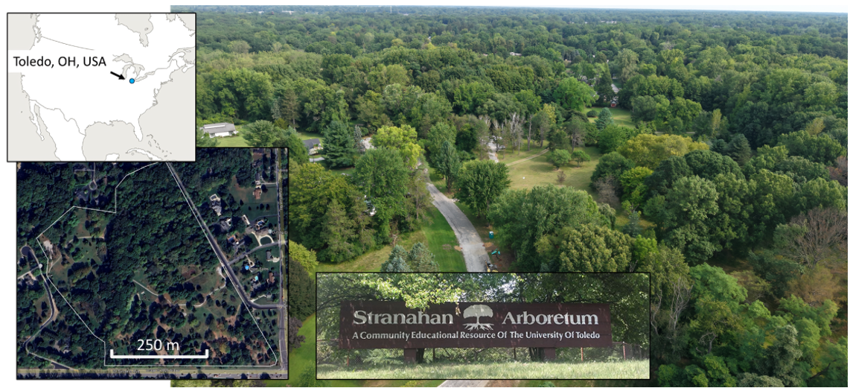
The R.A. Stranahan Arboretum (Figure 1) is located 5 km northwest of the University of Toledo (Toledo, OH, USA) main campus in an affluent suburban residential area, and includes a 19-ha, fenced-in space encompassing a native forest with glacial sand dunes, multiple wetlands, a stream flowing through a forested ravine, open grassy areas, some native prairie, and an extensive collection of trees from temperate regions of the world. The land was donated to the university in 1964 for the purpose of providing an active center for interdisciplinary research, learning, and extensive community engagement including public festivals, private events, and science programs for local schools. The Arboretum has played an important role in supporting student success by offering outdoor classroom and laboratory space for undergraduate and graduate courses, particularly in ecology, environmental science, and geology, in which students monitor groundwater, wildlife, and study the diverse ecosystems including wetlands, ponds, prairies, and forests. Many students value arboretums once they understand how natural areas support learning experiences and field-based research, as students prefer to visit campus areas with abundant green spaces (Aghabozorgi et al., 2025). Previous studies have also shown that exposure to green spaces and outdoor learning environments benefit student well-being, significantly improving student mental health by lowering stress and anxiety, all of which contribute to enhanced academic performance (Wang et al., 2023).
Current Challenge: Limited Funding and Potential Closure
U.S. institutions of higher learning have experienced a decade of declining undergraduate enrollment, exacerbated by the COVID-19 pandemic, which has constrained budgets, and forced difficult financial decisions (WCET, 2023). Universities in such circumstances are under extraordinary pressure to stabilize enrollment with ever-shrinking tuition revenues, including increased incentivization to provide unique, student-centric facilities and resources. Undergraduate enrollment at the University of Toledo declined considerably more (-27%) than the national average (-15%) from 2010 to 2021, followed by additional decline of 13% through 2025 during a national enrollment rebound of ~5% (NSC Research Center, 2025). Universities aware of the values and demands of current and potential students are positioned to
-
prioritize the student experience,
-
allocate resources to align with student needs, and
-
gain a competitive advantage over universities that fail to respond.
However, the current enrollment crisis has occurred within an academic culture that already viewed expenditures on environmental and conservation related programs, including biological field stations, as non-essential (Jaramillo et al., 2025), calling into question how a university perceives the benefits of owned natural spaces used for environmental research, education, and student well-being.
Some research stations are stable and expanding with institutional support (e.g., University of Cincinnati Field Center), or despite budgetary constraints are newly created through donor support (e.g., Kent State University’s New Outdoor Biological Research Station [Kent State, 2025]), and some are self-sufficient with sales and donations (e.g., Chadwick Arboretum, Ohio State University). However, the benefits of facilities at off-campus locations are generally underappreciated (Kimbrough, 2024) and are underfunded (Jaramillo et al., 2025), especially remote field stations (Eppley et al., 2024; NRC, 2014), and some are being sold-off (e.g., Hofmann forest, North Carolina State University). Regardless of its apparent value, a series of resource realignments and administrative priority changes have disadvantaged the Stranahan Arboretum for decades, and despite the current climate of fast-increasing value in university-owned natural spaces, the Arboretum remains without a dedicated budget, maintenance personnel, or other administrative support. The lack of resources, followed by closure during the COVID-19 pandemic, and deed restrictions that prohibit sale of the property, left the University of Toledo’s outdoor natural classroom and laboratory with an uncertain future. A difficult aspect of budgetary belt-tightening is predicting the potential value lost when a program or facility is cut or shut down. If the short-term savings resulting from the cut are relatively small compared to greater long-term losses, then not only does the university incur a loss of a valuable resource, but also the exacerbation of enrollment and budgetary issues. Alternatively, a modest investment in an entity, although difficult in the short-term, can allow a realization of its potential as a component of long-term institutional stability and growth.
Assumptions and Uncertainty About Student Awareness and Interest
Administrative decision makers need all the information they can get about the values of their current and prospective students. Understanding nuanced student values is especially needed at the University of Toledo (Toledo, OH, USA), where students typically rate courses and professors highly (Niche, 2026), yet also rank the institution behind all others in Ohio when asked if they would recommend their university to students (Wall Street Journal, 2025). Historically, University of Toledo administrators understood the value of the Stranahan Arboretum, with one associate vice president in 1994, writing,
“The Arboretum provides an environment that cannot be duplicated in any other environment, not the MetroParks, city parks or even private properties in this area. There have been several PhD dissertations that have come out of the Arboretum, none of which would have been possible in another environment. It is a living, natural laboratory that cannot be duplicated elsewhere on campus.”
More than three decades of declining support and activity later, that institutional knowledge has faded, and it is currently unclear how decisions affecting the Arboretum would impact student education, well-being, and connection to the university. An apparent lack of student awareness could be interpreted by decision-makers as low student priority, justifying divestment with minimal concern for student impact. However, the Arboretum is absent from university maps, strategic plans, sustainability initiatives, and is minimally featured on the university website, raising the question of whether students are truly disengaged or simply unaware of its existence. A 2022 informal survey of 46 students in the university’s general ecology course (EEES 3050) found only 11 (24%) students were aware of the Stranahan Arboretum. While that show-of-hands survey suggested a lack of awareness among a subset of undergraduate students, the value of the Arboretum to the students was unmeasured, and important data critical for administrative decision-makers remain unavailable.
Purpose of the Present Study
In an effort to formally and comprehensively assess student awareness of the Arboretum, and more importantly, their desire to visit, volunteer for, and maintain the vital functions at the Arboretum, we surveyed the University of Toledo undergraduate student body, as a component of our senior environmental capstone course (EEES 4970). We also assessed how students valued the Arboretum by asking about their willingness to pay, a standard measure in conservation science that uses a hypothetical market approach to determine the economic value of a habitat, species, or ecosystem service. In this case we assessed whether students would support a nominal student fee to fund operations at the Arboretum.
METHODS
Population of Interest
The aim of this study was to assess the awareness, interest, and willingness among undergraduate students at a single university to support a university-owned natural space that is intended for environmental research, education, and public engagement, but is generally neglected and under consideration for divestment by the university.
Survey Development
Four of us (KD, PD, LP, and SF) developed a survey comprising 1 prompt and 10 questions for undergraduate students enrolled at the University of Toledo during Fall semester, 2025 in consultation with our mentor, WVS. No other faculty administrators or students were informed or consulted during survey development. Prior to deployment, the survey was approved by both the university Survey Committee and Institutional Review Board (302384-UT). The survey was created and disseminated in Microsoft Forms to all 10,810 currently enrolled undergraduate students via their university email addresses on 3 November 2025. The survey was anonymous, with only one prompt (“select your academic college”) providing any identifying information. Due to time constraints, students had one week to complete the survey, and no follow-up emails were sent.
The survey was titled “Stranahan Arboretum interest survey,” and began with the following paragraph:
“The Stranahan Arboretum is a 47-acre property located in Toledo near the intersection of Corey and Sylvania roads and was donated to the University by the W.W. Knight family in memory of Robert Stranahan. The area is home to diverse habitats including natural waters, prairies, wetlands, and forests, and more than 800 mature native and exotic trees species. The facility serves as an outdoor educational resource for all students and faculty. The purpose of this brief, online survey is to understand student awareness and attitudes toward the UT Stranahan Arboretum, which is currently under consideration for closure. Your responses will help inform future decisions regarding the use and preservation of this unique campus resource.”
The survey prompt and questions were as follows:
-
Prompt: “Select your academic college” followed by a checkbox list of the eight undergraduate colleges at the university.
-
Question 1: “Have you heard of the Stranahan Arboretum?” (yes/no).
-
Question 2: “Have you visited the Stranahan Arboretum?” (yes/no).
-
Question 3: “Would you be interested in taking classes/participating in events at the Stranahan Arboretum?” (yes/no).
-
Question 4: “What factors might prevent you from visiting the Stranahan Arboretum? (check all that apply)” followed by a checkbox list including “distance, lack of transportation, lack of time, unaware of events, no interest, other.” If “other” was selected, a text box allowed for comment.
-
Question 5: “How often would you consider visiting the arboretum?” followed by a checkbox list including “daily, weekly, monthly, rarely, never, other.” If “other” was selected, a text box allowed comment.
-
Question 6: “If applicable, what times would you most likely visit? Check all that apply” followed by a checkbox list including “weekdays, weekends, mornings, afternoons,evenings.”
-
Question 7: “Upon paying tuition and general fees when registering for classes, would you support a nominal (~$5) opt-out fee to help fund arboretum activities?” (yes/no).
-
Question 8: “Which of the following would most motivate you to visit the arboretum? Check all that apply.” followed by a checkbox list including “relaxation and scenic walks, events (festivals, campus events, seasonal events), exercise or outdoor recreation, photography or artistic opportunities, learning about plants/trees, self-guided tour, educational programs or workshops, family or group activities, staff-guided tour, other.” If “other” was selected, a text box allowed comment.
-
Question 9: “Which amenity would be most important to you if visited the Stranahan Arboretum?” followed by a checkbox list including “restrooms, trails, seating areas, picnic areas, other.” If “other” was selected, a text box allowed comment.
-
Question 10: “Would you be interested in volunteering or participating in restoration or recreational activities at the arboretum?” (yes/maybe/no).
The prompt to identify each student’s academic college was intended to allow us to assess whether the responses were representative of the entire student body or biased toward specific groups. The questions were designed to address specific points to inform decision-makers at the university about how and why students want or do not want to use or support the arboretum. Question 1 and question 2 were intended to assess student awareness of the arboretum as a university property. Question 3 was a stand-alone assessment of student interest in taking classes and attending events at the arboretum. Questions 4, 5, 6, 8, and 9 were intended to assess reasons other than classes and organized events for which students would visit, how often they would visit, and what factors might limit their visitation of the arboretum. Question 7 and question 10 were assessments of whether students would support the arboretum financially and through volunteerism, respectively.
Data Analysis
We present all survey results as numerical values and percentages. To test whether responses were proportional to enrollment in each academic college we used linear regression. For questions gauging interest in classes/events, 7 (willingness to pay), and 10 (interest in volunteering), we used χ2 tests of independence to assess whether student answers differed among academic colleges. Tests were run in R (version 4.5.1 [R Core Team, 2025]) and we considered differences statistically significant at α = 0.05.
RESULTS
Respondent Breakdown
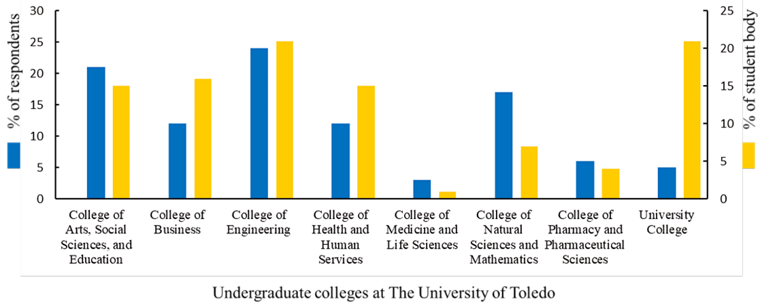
The survey was completed by 470 students for a response rate of 4.3%. However, not all respondents answered all questions, so sample sizes ranged from 458 to 470 for each question. Response rates were limited, as expected, by our narrow response window (one week) and our inability to send follow-up messages. Similar surveys of academic institutions with relatively low response rates provide reliable, important insights (e.g., Silverwood et al., 2026), so we are confident that our results are representative of student opinion at the university. Of the seven academic colleges represented in our survey, responses from university college were disproportionally low compared to enrollment. We are unsure if the low response rate reflects minimal interest among the part-time students and those with undeclared majors who tend to populate the college, or if the students affiliated themselves with a different college in our survey. The sample size of students responding to the survey was representative of all other academic colleges across campus (Figure 2), with college-level response rates proportional to college enrollments (R2 = 0.64, p = 0.03).
Student Awareness and Interest
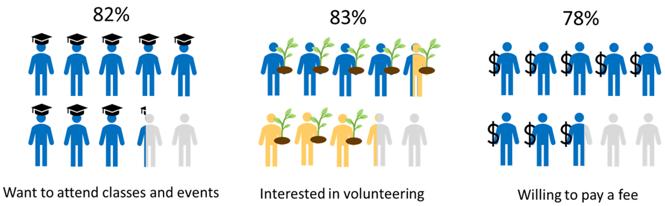
Of University of Toledo students, 61% were aware of the Arboretum and 39% reported having visited the Arboretum. A large percentage of students (82%) reported interest in taking classes and attending events at the Arboretum. This result varied significantly among colleges (χ2 = 20.1, df = 7, p = 0.004), ranging from the college of business (66% yes) to the college of pharmacy and pharmaceutical sciences and the college of natural sciences and mathematics (both 93% yes).
Student Willingness to Support
A similarly high percentage (83%) of students answered yes or maybe regarding willingness to volunteer their time in support of the Arboretum (Figure 3), and that interest was similar across academic colleges (χ2 = 10.5, df = 7, p = 0.16). In addition, 78% of students would support a new student fee to fund Arboretum operations (Figure 4), and that support was similar across academic colleges (χ2 = 11.6, df = 7, p = 0.12).
Student Desire to Visit
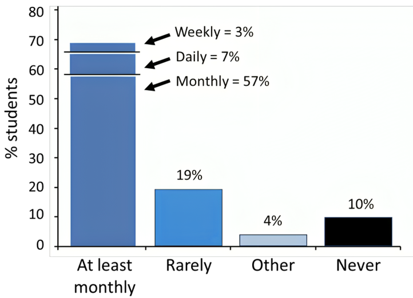
Results from question 3 indicated that 82% of students desire classes and organized events at the arboretum. Additionally, 67% of students would visit the Arboretum at least once per month, with 7% wanting to visit daily, and at all daily time windows offered on the survey. Students were asked to elaborate on the survey if they responded “other” regarding visitation frequency. Responses included statements ranging from “I don’t know what it is” to “often during warmer months.” Separately from the 82% of students desiring classes and organized events, at least 50% of students identified each of the following as motivational reasons to visit the Arboretum: relaxation and scenic walks, festivals, exercise, and artistic activities. The majority (72%) of students also identified the inclusion of walking trails and restrooms as high- priority amenities. The primary issue students identified as preventing them from visiting the Arboretum was lack of awareness of events (85%), with smaller percentages of students (< 25%) noting distance and transportation as limiting factors. Two students referenced the university prohibiting access preventing them from visiting the Arboretum.
DISCUSSION AND CONCLUSION
Arboretum Is Neglected and Divestment Efforts Continue
University arboretums provide significant environmental, educational, and mental health benefits to campus and local communities including roles as living research laboratories and spaces beneficial for mental health (Hipp et al., 2016; McFarland et al., 2008; Rakow & Ibes, 2022). The University of Toledo’s Stranahan Arboretum is an untapped resource in a time of great institutional need. Following years of neglect, faculty, staff, students, Arboretum neighbors, and other community members have volunteered to revitalize the Arboretum, resulting in revived research activity, newly developed courses that utilize the Arboretum, and renewed public and alumni interest in supporting and accessing the Arboretum. Despite this progress, in fall 2025, divestment plans were announced and student events, student internships and volunteer opportunities, and public access at the Arboretum were prohibited.
Disconnect Between University Administration and Students
Our study showed that undergraduate students at the University of Toledo overwhelmingly value and desire to support, visit, and use the university’s long-neglected Stranahan Arboretum. Our results indicate a substantial disconnect between students, who support a university-owned natural space intended for environmental research, teaching, community engagement, and experiences in nature, and an administration that fails to value a critical resource. Preservation of natural campus areas often conflicts with campus development plans, as administrators prioritize potential profit centers over maintaining green spaces, often evidenced in campus revitalization efforts (e.g., MSU Facilities Services, 2008). As a result, natural areas may suffer from a lack of resources compared to highly managed, prized spaces (like central malls and lawns), resulting in reduced visibility or decreased attractiveness to students (Jones, 2010). The disconnect between student values and those of administrations is especially puzzling given that learning in natural settings can motivate students who struggle in traditional, indoor classrooms (Dettweiler et al., 2015), and mental-health restoration is a primary driver for 76% of visits to university-owned botanical gardens (Jaramillo et al., 2025). Furthermore, student involvement in outdoor-related programs is linked to increased retention and timely graduation (Michael et al., 2017).
Survey Shows Overwhelming Student Support for the Arboretum
Student surveys frequently find that significant percentages of students are unaware of available services or activities (Flaherty, 2023). However, our survey showed that more than 60% of current students are aware of the Arboretum and 39% report having visited the property. This visitation result is consistent with Arboretum records for attendance in courses, events, and volunteer opportunities (~4,000 total; HMS unpublished data) from 2022-2025 under volunteer leadership. The awareness result (61%) represents a strong turnaround from three years earlier, when only 24% of students in the university’s general ecology course (i.e., students most likely to be aware) knew that the university owned an arboretum. Learning in nature is a positive experience for students, as course evaluations (curriculum and course materials) (Benfield et al., 2015) and overall interest in school (Becker et al., 2017) are demonstrably greater when students are educated in an outdoor setting. Therefore, after three years of classes, research activity, volunteer opportunities, and small student gatherings and events, we expected at least modest support among students for the Arboretum. However, survey results revealed that student support was overwhelming, as 82% of students reported interest in attending classes and events, 83% would consider volunteering to help the Arboretum, and 78% would support a new student fee to fund Arboretum operations. Even the least positive response from any academic college to any of the survey questions (college of business) had 66% of students respond positively regarding interest in Arboretum classes and events. That 78% of undergraduate students would support a new student fee is a notably high willingness to pay value among conservation-related surveys. This is especially noteworthy at the University of Toledo, where students come from a broad range of economic backgrounds and more than one-third are first-generation college students (utoledo.edu).
Why Students Don’t Use the Arboretum and the University’s Role
While the vast majority of the student population is aware of the Arboretum, 85% of students cited being unaware of Arboretum events as the primary factor preventing them from visiting the facility. It follows that limited visitation likely results in a lack of awareness amongst students of the university’s current prohibition on events, volunteering, and public access to the property. As a result of these limitations, awareness and use of the Arboretum is entirely dependent on word-of-mouth and volunteer efforts by faculty, staff, students, and community members. The university’s current restriction of Arboretum activities to only those involving formal courses and research supports the students’ greatest desire of attending classes at the Arboretum, but denies the students’ other wishes, which include scenic walks, festivals, exercise, and artistic activities. Two-thirds of the students responding to our survey would prefer to visit the Arboretum regularly, at least once per month, while 7% of respondents were interested in visiting daily. This desired visitation volume is comparable to the volumes noted for seemingly more popular facilities, like campus recreation centers, which attract up to 75% of students (Forrester, 2014). An important factor of our study is understanding that students who wish to visit the Arboretum are required to actively (vs. passively) visit the facility, as it is located away from the main campus. Results from previous studies measuring student utilization of green space showed that 33% were highly active green spaces users (Holt et al., 2019). Therefore, the 67% of University of Toledo students who desire to use the Stranahan Arboretum regularly represents a remarkable proportion of would-be active users.
Investing Will Provide Returns for Students and Admin
Perpetual prioritization of programs and facilities based on current activity rates can lead to detrimental institutional inertia, and failure to realize the revenue producing potential of long-neglected entities. Our results emphasize that the limited activity at the Stranahan Arboretum is not driven by a lack of interest or desire from students. This administrative view of the Arboretum as a low-value facility that lacks faculty and student interest, is thus self-fulfilling and unfortunately, self-destructive, as it precludes the administration from realizing the revenue-producing potential of the facility. It is clear that despite this circular dilemma, the level of awareness and positive opinions among student concerning the Stranahan Arboretum present an opportunity for the University of Toledo to make an informed, cost-effective priority realignment in a time of need for low-cost strategies that benefit student recruitment and retention. Support for the Arboretum represents a commitment to environmental research, education, outreach, and experiences desired by students. In alignment with the results of the current study, previous studies have shown that college students value and use green spaces on their campuses (Speake et al., 2013), and the benefits of natural areas extend beyond recreational uses. Specifically, short visits to campus green spaces effectively relieve student stress (Ibes et al., 2018), while student outlook can improve significantly following 10-20 minutes in a natural setting (Ibes & Forestell, 2022). Given the increasing enrollment trends in environmental science programs across the U.S. (Vincent, 2009), the overwhelming concern for environmental issues among students of all majors (Edmundson, 2024), and the corroboration of those values among students in our survey, the University of Toledo is positioned for a return on modest investment if Stranahan Arboretum personnel and operations are supported.
Author contributions: HMS: formal analysis, visualization, validation, writing – original draft, and writing – review and editing; KD, PD, LS, & SF: conceptualization, formal analysis, investigation, methodology, data curation, and writing – review & editing; JMR: writing – original draft, and writing – review & editing; WVS: investigation, methodology, project administration, supervision, validation, and writing – review & editing. All authors agreed with the results and conclusions.
Funding: No funding source is reported for this study.
Ethical statement: Ethical approval for conducting the survey was obtained from The University of Toledo Institutional Review Board (302384-UT), October 2025. Participation in the survey was voluntary and anonymous with the students’ academic college being the only identifying information.
AI statement: No AI tools were used in this work or manuscript.
Declaration of interest: No conflict of interest is declared by the authors.
Data sharing statement: Data supporting the findings and conclusions are available upon request from the corresponding author.
References
- Aghabozorgi, K., van der Jagt, A., Bell, S., & Smith, H. (2025). The role of university campus landscape characteristics in students’ mental health. Urban Forestry and Urban Greening, 111, Article 128863. https://doi.org/10.1016/j.ufug.2025.128863
- Anderson, S. (2022). Rising popularity of environmental programs. Keystone Education Group. https://www.keg.com/news/rising-popularity-of-environmental-programs
- Becker, C., Lauterbach, G., Spengler, S., Dettweiler, U., & Mess, F. (2017). Effects of regular classes in outdoor education settings: A systematic review on students’ learning, social and health dimensions. International Journal of Environmental Research and Public Health, 14(5), Article 485. https://doi.org/10.3390/ijerph14050485
- Benfield, J. A., Rainbolt, G. N., Bell, P. A., & Donovan, G. H. (2015). Classrooms with nature views: Evidence of different student perceptions and behaviors. Environment and Behavior, 47(2), 140-157. https://doi.org/10.1177/0013916513499583
- BLS. (2025). U.S. Bureau of Labor Statistics occupational outlook handbook. Bureau of Labor Statistics. https://www.bls.gov/ooh/life-physical-and-social-science/environmental-scientists-and-specialists.htm
- Boyle, A., Maguire, S., Martin, A., Milsom, C., Nash, R., Rawlinson, S., Turner, A., Wurthman, S., & Conchie, S. (2007). Fieldwork is good: The student perception and the affective domain. Journal of Geography in Higher Education, 31(2), 299-317. https://doi.org/10.1080/03098260601063628
- Clements, R. (2004). An investigation of the status of outdoor play. Contemporary Issues in Early Childhood, 5(1), 68-80. https://doi.org/10.2304/ciec.2004.5.1.10
- Cudworth, D., & Lumber, R. (2021). The importance of Forest School and the pathways to nature connection. Journal of Outdoor and Environmental Education, 24, 71-85. https://doi.org/10.1007/s42322-021-00074-x
- de Chavez, A. C., Seims, A. L., Dickerson, J., Dharni, N., & McEachan, R. R. C. (2024). Unlocking the forest: An ethnographic evaluation of Forest Schools on developmental outcomes for 3-year-olds unaccustomed to woodland spaces. Wellcome Open Research, 9, Article 519. https://doi.org/10.12688/wellcomeopenres.22851.1
- Dettweiler, U., Ünlü, A., Lauterbach, G., Becker, C., Gschrey, B. (2015). Investigating the motivational behavior of pupils during outdoor science teaching within self-determination theory. Frontiers in Psychology, 6. https://doi.org/10.3389/fpsyg.2015.00125
- Edmundson, A. (2024). Eco-anxiety effects college students [Unpublished master’s thesis]. University of Nebraska–Lincoln.
- Eppley, T. M., Reuter, K. E., Sefczek, T. M., Tinsman, J., Santini, L., Hoeks, S., Andriantsaralaza, S., Shanee, S., Fiore, A. D., Setchell, J. M., Strier, K. B., Abanyam, P. A., Mutalib, A. H. A., Abwe, E., Ahmed, T., Ancrenaz, M., Andriantsimanarilafy, R. R., Ang, A., Aureli, F., … Mittermeier, R. A. (2024). Tropical field stations yield high conservation return on investment. Conservation Letters, 17(2), Article e13007. https://doi.org/10.1111/conl.13007
- Flaherty, C. (2023). Student views on the college experience. Inside Higher Education. https://www.insidehighered.com/news/student-success/college-experience/2023/08/21/student-assessments-their-college-experience
- Forrester, S. (2014). The benefits of campus recreation. NIRSA.
- Funk, C. (2021). Key findings: How Americans’ attitudes about climate change differ by generation, party and other factors. Pew Research Center. https://www.pewresearch.org/short-reads/2021/05/26/key-findings-how-americans-attitudes-about-climate-change-differ-by-generation-party-and-other-factors/
- Hattie, J., Marsh, H. W., Neill, J. T., & Richards, G. E. (1997). Adventure education and outward bound: Out-of-class experiences that have a lasting effect. Review of Educational Research, 67(1), 43-87. https://doi.org/10.3102/00346543067001043
- Hickman, C., Marks, E., Pihkala, P., Clayton, S., Lewandowski, R. E., Mayall, E. E., Wray, B., Mellor, C., & Van Susteren, L. (2021). Climate anxiety in children and young people and their beliefs about government responses to climate change: A global survey. The Lancet Planetary Health, 5(12), e863-e873. https://doi.org/10.1016/S2542-5196(21)00278-3
- Hipp, J. A., Gulwadi, G. B., Alves S., & Sequeira, S. (2016). The relationship between perceived greenness and perceived restorativeness of university campuses and student-reported quality of life. Environment and Behavior, 48(10), 1292-1308. https://doi.org/10.1177/0013916515598200
- Holt, E. W., Lombard, Q. K., Best, N., Smiley-Smith, S., & Quinn, J. E. (2019). Active and passive use of green space, health, and well-being amongst university students. International Journal of Environmental Research and Public Health, 16(3), Article 424. https://doi.org/10.3390/ijerph16030424
- Ibes, D. C., & Forestell, C. (2020). The role of campus greenspace and meditation on college students’ mood disturbance. Journal of American College Health, 70(1), 99-106. https://doi.org/10.1080/07448481.2020.1726926
- Ibes, D. C., Hirama, I., & Schuyler, C. (2018). Greenspace ecotherapy interventions: The stress reduction potential of green micro breaks integrating nature connection and mind body skills. Journal of Ecopsychology, 10(3), 137-150. https://doi.org/10.1089/eco.2018.0024
- ISCN. (2008). Best practices–Future challenges. International Sustainable Campus Network. http://www.kerstinhoeger.com/HOEGER/publications/0804_ISCN-Conference-Summary.pdf
- Jaramillo, M. A., Jimenez, P., & Frediani, K. (2025). The educational garden: Exploring the multifaceted roles of university botanic gardens through history. Biological Diversity, 2(2-3), 85-94. https://doi.org/10.1002/bod2.70006
- Johnson, M. D., Sprowles, A. E., Goldenberg, K. R., Margell, S. T., & Castellino, L. (2020). Effect of a place-based learning community on belonging, persistence, and equity gaps for first-year STEM students. Innovative Higher Education, 45(6), 509-531. https://doi.org/10.1007/s10755-020-09519-5
- Jones, M. (2010). Master planning: The theory behind campus landscaping. The Michigan Daily. https://www.michigandaily.com/uncategorized/campus-landscaping
- Kent State. (2025). Kent State’s new outdoor biological research station takes flight. Kent State University. https://www.kent.edu/cas/news/kent-states-new-outdoor-biological-research-station-takes-flight
- Kimbrough, L. (2024). Biological field stations deliver high return on investment for conservation, study finds. Mongabay. https://news.mongabay.com/2024/03/field-stations-deliver-high-return-on-investment-for-conservation-study-finds/
- Louv, R. (2005). Last child in the woods: Saving our children from nature-deficit disorder. Atlantic Books.
- Mann, J., Gray, T., Truong, S., Brymer, E., Passy, R., Ho ,S., Sahlberg, P., Ward, K., Bentsen, P., Curry, C., & Cowper, R. (2022). Getting out of the classroom and into nature: A systematic review of nature-specific outdoor learning on school children’s learning and development. Frontiers in Public Health, 10. https://doi.org/10.3389/fpubh.2022.877058
- McFarland, A. L., Waliczek, T. M., & Zajicek, J. M. (2008). The relationship between student use of campus green spaces and perceptions of quality of life. HortTechnology, 18(2), 232-238. https://doi.org/10.21273/HORTTECH.18.2.232
- Meyer, M. H., Hokanson, S., Galatowitsch, S., & Luby, J. (2010). Public gardens: Fulfilling the university’s research mission. HortTechnology, 20(3), 522-527. https://doi.org/10.21273/HORTTECH.20.3.522
- Michael, J. M., Morris-Dueer, V., & Reichert, M. S. (2017). Differential effects of participation in an outdoor orientation program for incoming students. Journal of Outdoor Recreation, Education, and Leadership, 9(1). https://doi.org/10.18666/JOREL-2017-V9-I1-7483
- MSU Facilities Services. (2008). Montana State University long range campus development plan. Chapter 5: Implementation and plan phasing. Montana State University. https://www.montana.edu/lrcdp/documents/LRCDP_chap5.pdf
- Niche. (2025). University of Toledo. Niche. https://www.niche.com/colleges/university-of-toledo/
- NRC. (2014). Enhancing the value and sustainability of field stations and marine laboratories in the 21st century. National Research Council. https://www.nationalacademies.org/projects/DELS-BLS-13-07/publication/18806
- NSC Research Center. (2025). Current term enrollment estimates, 2025. National Student Clearinghouse Research Center. https://nscresearchcenter.org/current-term-enrollment-estimates/
- Pyle, R. M. (2003). Nature matrix: Reconnecting people with nature. Oryx, 37(2), 206-214. https://doi.org/10.1017/S0030605303000383
- R Core Team. (2025). R: A language and environment for statistical computing. R Foundation for Statistical Computing. https://www.R-project.org/
- Rakow, D. A., & Ibes, D. C. (2022). Campus nature Rx: How investing in nature interventions benefits college students. Frontiers in Psychology, 13. https://doi.org/10.3389/fpsyg.2022.960370
- Silverwood, S., Lewis, L., Kim, A., Chang, A., Pham, T., Ashmead, S., & Holman, H. (2026). Evaluating interest and feasibility of climate education at a medical school in Michigan. Interdisciplinary Journal of Environmental and Science Education, 22(1), Article e2607. https://doi.org/10.29333/ijese/17805
- Speake, J., Edmonson, S., & Nawaz, H. (2013). Everyday encounters with nature: Students’ perceptions and use of university campus green spaces. Human Geographies, 7(1), 21-31. https://doi.org/10.5719/hgeo.2013.71.21
- Vincent, S. (2009). Growth in environmental studies and science programs. Association for Environmental Studies and Sciences Newsletter, 2(2), 1-4.
- Wall Street Journal. (2025). The WSJ/college pulse 2025 best colleges in the U.S. ranking rates the top 500 universities in the country. Wall Street Journal. https://www.wsj.com/rankings/college-rankings/best-colleges-2025?mod=searchentity_section&query=university+rankings
- Wang, J., Sankaridurg, P., Naduvilath, T., Li, W., Morgan, I. G., Rose, K. A., Weng, R., Xu, X., & He, X. (2023). Time outdoors positively associates with academic performance: A school-based study with objective monitoring of outdoor time. BMC Public Health, 23, Article 645. https://doi.org/10.1186/s12889-023-15532-y
- WCET. (2023). College enrollment: Cliffs, shifts, and lifts. WICHE Cooperative for Educational Technologies. https://wcet.wiche.edu/frontiers/2023/07/14/college-enrollment-cliffs-shifts-and-lifts/
How to cite this article
APA
Streby, H. M., Depinet, K., Dufour, P., Simbeck, L., Fuleky, S., Refsnider, J. M., & Von Sigler, W. (2026). Students overwhelmingly desire the reopening and operation of a neglected university-owned natural space. Interdisciplinary Journal of Environmental and Science Education, 22(3), e2616. https://doi.org/10.29333/ijese/18706
Vancouver
Streby HM, Depinet K, Dufour P, Simbeck L, Fuleky S, Refsnider JM, et al. Students overwhelmingly desire the reopening and operation of a neglected university-owned natural space. INTERDISCIP J ENV SCI ED. 2026;22(3):e2616. https://doi.org/10.29333/ijese/18706
AMA
Streby HM, Depinet K, Dufour P, et al. Students overwhelmingly desire the reopening and operation of a neglected university-owned natural space. INTERDISCIP J ENV SCI ED. 2026;22(3), e2616. https://doi.org/10.29333/ijese/18706
Chicago
Streby, Henry M., Kelsey Depinet, Paige Dufour, Layla Simbeck, Sydney Fuleky, Jeanine M. Refsnider, and W. Von Sigler. "Students overwhelmingly desire the reopening and operation of a neglected university-owned natural space". Interdisciplinary Journal of Environmental and Science Education 2026 22 no. 3 (2026): e2616. https://doi.org/10.29333/ijese/18706
Harvard
Streby, H. M., Depinet, K., Dufour, P., Simbeck, L., Fuleky, S., Refsnider, J. M., and Von Sigler, W. (2026). Students overwhelmingly desire the reopening and operation of a neglected university-owned natural space. Interdisciplinary Journal of Environmental and Science Education, 22(3), e2616. https://doi.org/10.29333/ijese/18706
MLA
Streby, Henry M. et al. "Students overwhelmingly desire the reopening and operation of a neglected university-owned natural space". Interdisciplinary Journal of Environmental and Science Education, vol. 22, no. 3, 2026, e2616. https://doi.org/10.29333/ijese/18706