
 Full Text (PDF)
Abstract
The demands of a test-dominant education system point towards the need for students to have opportunities for unhurried learning engagements, a movement known as slow education. The purpose of this study was to examine the long-term influence of Sit Spot–a recurrent, structured time to reflect outdoors–on students’ holistic well-being. Using a narrative case study approach, we interviewed a secondary field ecology teacher and seven of his former students to understand the impact of high school Sit Spot experiences during a semester-long science class. Three primary outcomes emerged: (1) enduring impact on the whole person, (2) engagement with affect, and (3) a connection and care for nature. There were also a variety of mediating factors that contributed towards the influence of Sit Spot on students’ holistic well-being. The findings point towards the importance of intentionally slowing down and making space for mindfulness outdoors in a school science setting.
License
This is an open access article distributed under the Creative Commons Attribution License which permits unrestricted use, distribution, and reproduction in any medium, provided the original work is properly cited.
Article Type: Research Article
INTERDISCIP J ENV SCI ED, Volume 22, Issue 2, 2026, Article No: e2610
https://doi.org/10.29333/ijese/17848
Publication date: 01 Apr 2026
Online publication date: 03 Feb 2026
Article Views: 2722
Article Downloads: 2140
Open Access HTML Content Download XML References How to cite this articleHTML Content
INTRODUCTION
In a rapidly changing world, a slower approach to education seems counter intuitive to the complex and shifting realities facing us on a global scale. Yet the current economic model of education hyper-focused on test scores reduces students merely to the products they are expected to generate (Smith, 2017). Furthermore, the ever-increasing demands of a test-dominant education stand in contrast with the emotional connections to content learning in science education that use wonder and imagination to build and sustain interest in learners (see Conijn et al., 2022). For decades, scientists have argued that it is the wondrous undiscovered ideas that serve as an emotive force driving scholarly endeavors particularly in scientific inquiry. Enigmas that vex us can become affective links to learning that incite an intrinsic desire to learn rather than an external pressure placed by an over-testing educational culture. Yet this requires a slower approach to learning, one that is not dominated by demands to perform or pressures to accumulate academic knowledge at the expense of emotional or mental health (Holt, 2009).
Social-emotional learning and time in nature are essential to children’s holistic well-being, supporting psychological health, self-regulation, and social competence (Norton & Watt, 2014; Passarelli et al., 2010). This is especially critical for post-pandemic students, who experienced increased screen time, social isolation, and rising rates of anxiety and depression that disrupted typical development (Loades et al., 2020; Racine et al., 2021). Reintroducing nature-based experiences alongside intentional social-emotional learning can help rebuild resilience, foster connection, and promote mental health in ways traditional classrooms may not fully address (Becker et al., 2017; Chawla, 2015).
This research project represents an effort to bring this type of holistic learning into focus by investigating the long-term impacts of slow, deliberate engagement with the outdoors in a high school field ecology course. The teacher in this study intentionally integrates Sit Spot–a weekly, nature-based contemplative practice–in which students select their own outdoor location and return to it regularly. His approach aligns with research suggesting that such practices can be implemented in both formal and non-formal settings and support mental health and academic growth (Beavington et al., 2021; Strich, 2012). However, few studies have examined the specific impacts of Sit Spot within formal education settings.
The purpose of this study was to fill the silences (see van Manen, 1997) in the literature regarding the role of recurrent opportunities for students to slow down, sit, and reflect in an outdoor setting as part of science learning. Chambliss (2013) recognizes the need for research to investigate these silences:
“I have yet to see, however, a bridge built linking the benefits gained from contemplation within a school community with the human and wild communities in which the schools are embedded. It is critically important to build this bridge” (p. 116).
Chambliss’ (2013) call underscores the need for approaches that connect contemplative practice with students’ scientific and ecological understanding, inviting new possibilities for what science learning can look like in formal settings. Although anecdotal accounts of Sit Spot use within and beyond the typical school day exist, there remains limited empirical research examining Sit Spot as a pathway to holistic learning. Existing studies primarily draw from broader research on the benefits of nature and the positive social, emotional, and cognitive outcomes associated with being outdoors. Our research question reflects the need to fill these silences by further understanding a slow but deliberate approach to learning in an outdoor environment in the context of science learning: What is the long-term influence of Sit Spot on students’ holistic well-being?
CONCEPTUAL FRAMEWORK
Our conceptual framework is comprised of the preexisting literature on slow education, Sit Spot, and holistic well-being. We also include our epistemological premise which grounds this inquiry.
Slow Education
In response to standardized testing and uniform measures, slow education has emerged as a movement that acknowledges students as whole people and appreciates the need for time during the school day for creative, unhurried thinking (Doghonadze, 2016). The term was first employed by Holt (2002), who built upon concepts inherent to the slow food movement of the 80s. Yet other voices who have contributed to the conversations challenging the fast-paced approach to learning that has become predominant in the 21st century. Ritzer (1993) spoke of the McDonaldization of schools, making a call for us to transform the current system. Since Holt (2002) introduced the term, other scholars have built upon his ideas, sharing concepts that contribute to this philosophical approach (see Honoré, 2013; Pierce & Telford, 2023; Robinson, 2010).
Slow education is a philosophy and approach that pushes against education as subservient to the economy and intended mainly to build productive citizens (Smith, 2017). The economic productivity model of formal education places heavy demands on students, requiring efficiency and speed (Impola, 2023). This current push for output and outcomes within education stands in direct conflict to deep, intentional thinking characterized by reflection and responsiveness (Impola, 2023).
Slow education has long-term value and benefits (Garton-Grundling, 2019). In contrast to the economic goal of learning, slow education proponents value the holistic well-being of students as part of a greater community. Our goal should be to prepare students for the world rather than compare them to standards as the current model reflects (Holt, 2009). Standardized tests are the hallmark of a commercialized education system and result in “regurgitated gobbets of knowledge” from students (Holt, 2009). Slow education is counter-cultural, acknowledging the students’ creativity and empowering them throughout the process rather than focusing solely on outcomes (Smith, 2017). Derr et al. (2018) extend the goal of education beyond preparation and describe how to empower students as citizens, and we, as scholars and educators, echo the belief that children and youth “are a unique group that already has much to contribute to society, just as they are” (p. 8).
In regard to outdoor learning, effective nature-based experiences assume a different approach to time, implementing a slower, more flexible structure to student engagements (AQCPE, 2023). Although they may not employ the term “slow education” many outdoor/environmental educators and researchers talk about this slower approach that coincides with learning outside. There are great benefits to providing a slow and steady pathway for students to learn, grow, and develop at a tortoise’s steady pace, particularly within an outdoor education context (McCree et al., 2018). We turn now towards another key component of our conceptual framework, Sit Spot, which echoes many of slow education’s tenets vis-à-vis mindfulness, stillness, and silence.
Sit Spot
The practice of sitting still in nature has existed for millennia across cultures. Young et al. (2008) formalized one specific approach to this routine, which was the version used by the teacher in our study, known as Sit Spot, as a core practice for connecting with the natural environment. A Sit Spot is a place outside, preferably somewhere easily accessible without harming animal or plant life, where one learns to sit alone, still, and quiet, intimately connecting with nature (Young et al., 2010). The specifics of Sit Spot’s implementation ebbed and flowed as it was adopted within a variety of settings around the United States and the world. There appears to be some commonalities in how Sit Spot is perceived, however, characterized by intentionality, frequency, stillness, and sense of place. We appreciate Strich’s (2012) simple definition: “structured time for students to be alone outside with their thoughts and feelings” (p. 22), recognizing that this structure is not always heavily scaffolded and can be free flowing.
A simple Google search of “outdoor Sit Spot” reveals many thought pieces, magazine articles, or blog posts related to this phenomenon. However, we were surprised to find very few articles in peer-reviewed academic journals that have empirically studied Sit Spot. Although this shortage makes it difficult to synthesize pre-existing research, it confirms that our investigation is well-situated to add to the body of knowledge of Sit Spot and their influence on students.
Chambliss (2013) studied Sit Spot with families as part of a mindfulness program, using Sit Spot as meditative opportunities for contemplation in nature. Chambliss (2013) found that Sit Spot strengthened participant relationships with the natural environment, brought about a variety of positive emotions, and strengthened a sense of community within the group. Similarly, Stapleton and Lynch (2021) examined the impact of continual exposure to the same outdoor place over the course of multiple years. Their investigation involved elementary students who took repeated trips to a local arboretum during the typical school day and engaged in Sit Spot as a regular component of the visits. Over time, student participants showed a greater awareness of nature and improved observation skills, leading towards pro-environmental behavior and affinity for the natural environment.
Holistic Well-Being
Holism as a broad concept was originated by Smuts (1926) to point out that natural systems can be considered as multiple elements making up an integrated whole (Michaelson et al., 2018). More recently, scholars have researched holistic well-being and placed it within the context of learning in nature (Michaelson et al., 2018; Ng & Boey, 2021; Russell et al., 2013; Silva et al., 2018).
Russell et al. (2013) provide the most comprehensive synthesis regarding the benefits of nature as a contributor towards holistic well-being, identifying a list of ten constituents outlined in Table 1. In their review of more than 200 studies, Russell et al. (2013) found strong evidence that spending time in nature contributes towards happier, healthier people, with moderate evidence pointing towards improvements regarding a sense of place or connectedness to nature. Other researchers suggest that spiritual wellness, connectedness, sense of place, and healing from trauma can be improved with time in nature (Carruthers, 2011; Hubball & West, 2008; Silva et al., 2018).
Table 1. Ten constituents of well-being (Russell et al., 2013)
|
Previous studies overlap with the ten constituents listed in Table 1, including Michaelson et al.’s (2018) work that investigated the elements which underlie holistic health in adolescents. There is evidence that youth perceive holistic well-being as impacting multiple spheres of life, including physical, mental, emotional, spiritual, and social frameworks (Michaelson et al., 2018).
Social-emotional learning and time in nature are both vital to holistic well-being, supporting children’s psychological health, self-regulation, and social competence (Norton & Watt, 2014). Yet, many children today spend far more time on screens than outdoors, missing key developmental benefits such as improved mental health, autonomy, and a deeper sense of place (Gill, 2014; Nagata et al., 2024). This is especially true for post-pandemic students, who experienced prolonged social isolation, increased screen time, and heightened rates of anxiety and depression–factors that disrupted typical social-emotional development (Loades et al., 2020). Reintegrating nature-based experiences and intentional social-emotional learning helps rebuild resilience, restore a sense of connection, and support mental health in ways that traditional classroom settings alone may not fully address (Becker et al., 2017; Chawla, 2015).
Building on the understanding of nature and social-emotional learning, scholars have further emphasized the importance of holistic approaches to education. Corbin and Pangrazi (2001) integrate intellect as an important component suggesting that school-based learning is about more than just students’ cognitive gains. Existing scholarship demonstrates a range of understanding for holistic well-being and introduces links between nature connection and wellness. Nature can play a significant role in promoting well-being leading to improved physical and psychological health, sense of place, and healing from trauma.
Epistemological Premise
In this section, we clarify our worldview as researchers and explain how that worldview reframes what science learning can be. As scholars who hold a constructionist perspective, we understand that research does not simply uncover a singular truth; rather, it produces evidence through the interpretive, linguistic, and relational practices of those engaged in inquiry (Braun & Clarke, 2022). Meaning is socially constructed through socialization, language, and collective norms (Crotty, 2015; Lee, 2012), and this orientation shapes not only how we engage with our data but also how we conceptualize science education itself.
Certain traditions within science education continue to rely on positivistic assumptions that privilege objectivity, procedural correctness, and the received view of science as a rational, reliable method for accessing truth (Lather, 2017; Suppe, 1974). These frameworks tend to dominate curriculum and instruction, often reinforcing ideologies that marginalize students whose ways of knowing fall outside mainstream school science (Hogan & Bae, 2025). Recognizing these limitations reflects our commitment to constructionist and relational ways of knowing, which sit in contrast to the positivistic norms that dominate much of K-12 science. Within this stance, we position Sit Spot as a practice capable of cultivating a different type of science education, one that values authentic inquiry, attunement to place, and the holistic well-being of students. In doing so, we aim to expand how science and ecology are conceived in formal settings and support more inclusive, expansive understandings of what science can be (see Sherman et al., 2021).
As constructionists, the research team approached this inquiry from a variety of backgrounds and experiences that have shaped the way in which we worked with the data, each other, and our participants. Our positionality as individuals and as a group is an integral part of the research, contextualizing the sensemaking process and our final manuscript. Thus, we believe it is important to be transparent with readers regarding our own interest in concepts related to this project. Author 1’s passion for outdoor learning began during her time as a K-8 teacher, where she creatively integrated state-mandated curriculum into outdoor settings. Now a university researcher and instructor, she explores how educators utilize outdoor spaces to foster students’ holistic wellbeing. Author 2 is a committed high school science teacher who incorporates outdoor learning into his curriculum to engage students in the process of science and authentic learning. He hopes to empower his students for a lifetime of learning and encourages other teachers to incorporate outdoor learning in their own practice. Author 3 was privileged to grow up playing and role playing in a rural community characterized by mixed forests and open spaces. As a university teacher and researcher, he is deeply interested in the extent to which meaningful learning experiences in nature affect humans’ capacity to be stewards for the natural, cultural, and built environments. Author 4 has had many personal experiences recreating and exploring nature around the world. He is a university professor whose scholarly work centers on the ways in which emotions play a powerful role within learning and how slowing down can create opportunities for wonder and connection to the natural world. Author 5’s educational background is rooted in teaching in rural communities, where strong connections to place and community have fostered holistic thinking among her students. Now a postdoctoral scholar, she continues to support rural education by helping teachers and administrators recognize and harness the unique potential of their local environments.
These five authors comprised the research team working on this project, a mix of individuals each representing a different institution around the United States, all joined by a mutual interest in holistic wellbeing and outdoor learning. In the next section, we expound on our narrative case study approach and describe our specific methods that are contextualized within our positionality and stem from our constructionist epistemic framework.
METHODOLOGY
Narrative theory is informed by diverse paradigms and does not have a singular theoretical foundation (Kim, 2015). Thus, our aforementioned constructionist premise forms the basis for this inquiry that is rooted in the assumption that we can generate knowledge through the stories that people share and experience. Because we believe that knowledge is mutually constructed through interaction (Lee, 2012), narrative inquiry is a logical and natural research framework through which we can come to understand human experiences. Narratives highlight the messiness of human experiences and social interactions (Gao & Chugh, 2023).
Taking on a narrative approach empowered us to study experiences over time as stories that our participants recounted (see Wolgemuth & Donohue, 2006). Memory is an active process of meaning-making, deeply tied to identity and reflection (Fivush, 2011; Singer, 2004). Narrative inquiry goes beyond simply collecting and retelling these memories; it is woven throughout the ways in which we, as researchers, thought about and approached data collection, organization, and analysis (Butler-Kisber, 2010; Byrne, 2015). The narrative approach also aligns with slow pedagogy’s focus on the enduring meaning and lasting influence of educational experiences over time. As constructionists, the role of the research team was to be co-producers of knowledge with participants, coming alongside them to retell and relive their stories. We consider it a privilege and responsibility to re-present the Sit Spot narratives our participants shared and accentuated through additional data sources, such as photos or emails.
Case studies are helpful for examining complex situations within a specific context (see Gao & Chugh, 2023). We argue that case study is a “genre” of research that can be applied to various methodologies (Hamilton & Corbett-Whittier, 2013). Case studies are not a method in and of themselves but a decision of what to be studied (Merriam & Tisdell, 2016) and a way to approach other types of inquiry (in this study, narrative) within a bounded unit. Our case–the unit of analysis–was the phenomenon of Sit Spot experiences tied to one specific teacher and a purposefully sampled group of his former students. Since we must interpret lived experiences within social, political, and cultural settings (Maynes et al., 2012), a case study genre allowed us to understand Sit Spot within a specific context and community.
Participants
After pursuing ethics approval from the Institutional Review Board (IRB), we recruited participants with experiences engaging in Sit Spot. This was a purposeful selection (see Maxwell, 2013) because it was a bounded case that included one teacher (pseudonym Wally) and some of his former students who are now in their 20s. In Wally’s class, students participated in Sit Spot on a regular basis, using the time to journal and make connections to ecological concepts. We sent the IRB-approved recruitment script via email and explained the purpose of the inquiry to potential participants. In total, we had seven student participants, and one teacher to make up the Sit Spot case study. Table 2 displays some basic demographic information, including how many years have passed since participants’ Sit Spot experiences. Although Wally was a teacher-participant, he was also heavily involved in the research process and played a key role in data analysis.
Table 2. Study participants
|
Data Sources
Many qualitative scholars have pushed against the term data which connotes a separate entity rather than a constructed concept (see Butler-Kisber, 2010; Clandinin & Connely, 2004; Maynes et al., 2012). Terms such as field texts and narrative material are common within approaches to inquiry similar to ours. Although we continue to use the word data to describe that which was generated from interviews, journal entries, and photographs, we view it from a constructionist epistemological premise that understands the co-constructed nature of reality. Semi-structured interviews were the primary data source in our study, yet these were also supplemented by other narrative material, such as Sit Spot journal entries, email correspondence, and photographs.
Retrospective semi-structured interviews
Narrative research often relies on retrospective interviews to access participants’ meaning-making around past experiences, highlighting how individuals link these experiences to their evolving sense of self (Riessman, 2008). Previous narrative research within the field of education has used retrospective interviews as a way to capture rich, reflective insights from participants about former experiences (e.g., DeJaeghere & Arur, 2024; Selwyn, 2012). This interviewing method provides a unique opportunity to explore long-term impacts that shape both personal and educational trajectories through the years. As qualitative researchers, we recognize that retrospective narratives provide insight into which experiences have become significant for individuals over time.
The retrospective interviews were semi-structured in nature, meaning they had some set structure but left freedom for the researcher to adjust the course of the interview if needed. In-interview analyses (see Saldaña & Omasta, 2018) occur when researchers attend to participant answers and redirect depending on individual responses. Our interview protocol had two separate sections, one composed of questions to ask the teacher, and the other section geared towards student experiences. Table 3 lists some sample questions that were part of our semi-structured interview protocol. The research team agreed that we could ebb and flow amongst the questions to allow for the in-interview analyses mentioned above as well as the overall flow of conversation. This is similar to what Gubrium and Holstein (2003) call active interviews, which involves creating a space for participants to tell their stories by activating their knowledge through research questions.
Table 3. Sample questions from semi-structured interview protocol
|
All of the interviews were conducted over Zoom and lasted between 30 and 60 minutes. They were recorded (both audio and video) and transcribed shortly after the interview itself. Each member of the research team took part either in the interviews themselves or in the transcription process.
Sit Spot journal entries and additional participant contributions
Additionally, Wally has made it a practice to save some excerpts from student Sit Spot journals over the years, some of which belonged to our study participants. Wally stated that student artifacts, such as the Sit Spot journals, were a way to encourage other students as well as support their own practice as an educator. The Sit Spot journal excerpts included observations, personal reflections, sketches, and application of content in environmental science, illuminating in-the-moment thoughts and feelings from our participants. With the students’ permission, we included these as part of the qualitative data set as a way to illustrate key findings. The supplementary qualitative material did not go through the formal data analysis process but served as contextual support that enriched our understanding and helped to vividly illustrate participants’ experiences.
After the interviews, participants were invited to submit additional thoughts or photos via email that related to the topic of Sit Spot. Three participants responded with short phrases or paragraphs specifically noting their Sit Spot experiences in writing. Wally submitted photographs to complement his narratives describing the Sit Spot within his classroom. We used these photos as supplemental information rather than analyzing them separately; none of the images contained any identifiable information.
Analysis Process
The research team worked together on building goals, questions, designing, and analyzing as a collaborative team, and negotiated those approaches and roles throughout the duration of the study. This was especially true during our data analysis process which included three cycles of data considerations: (first cycle) summarizing sections of participant narratives, (second cycle) making connections across patterns within these narratives, and (third cycle) choosing representative narratives to connect back to the patterns evident in the data. Because narrative methodology is fluid and lacks distinct procedures (Johnson & Christensen, 2014), these three analysis cycles were informed from other qualitative approaches (e.g., Butler-Kisber, 2010; Miles et al., 2020).
First cycle
During the first cycle of data analysis, our main goal was to understand the story told by each participant as well as the overall case narrative (see Kim, 2015). After reading through the interviews to get a sense of the greater narrative, we individually concept coded the transcripts by assigning ideas to large chunks of the narrative material (see Miles et al., 2020) using Google Docs’ comment feature to track our thinking. Bogdan and Biklen (1992) use the term broad brush strokes to describe how researchers get a comprehensive sense of the narrative material as they navigate the inquiry process. Similarly, Butler-Kisber (2010) advises a coarse-grained examination of the data as an initial step while familiarizing oneself with the material. During this cycle, we leaned toward a psychological analysis of our narrative material as we considered participant thoughts, intentions, and motivations, contextualized through a holistic lens (see Merriam & Tisdell, 2016).
As we coded the eight interview transcriptions through written responses on Google Docs, we began to respond to each other, leaving comments and replies that grew into a documented discourse. Although our research questions formed a starting point for the first cycle of data analysis, we worked to remain open to emerging patterns. For example, OEE experiences as different surfaced as a common summary even though it was not directly related to any of our initial research questions. At the end of the first cycle, the research team had interview transcription documents that contained each member’s comments and responses alongside a separate document that outlined emerging patterns. We met via Zoom to discuss the data before entering the second cycle.
Second and third cycles
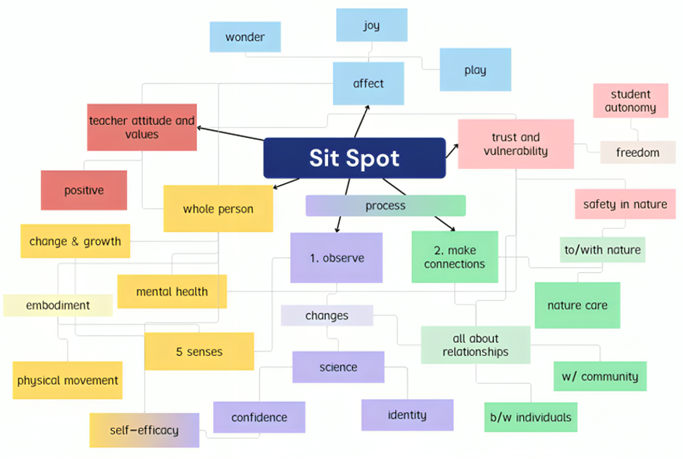
According to Miles et al. (2020), the second cycle involves grouping summaries from the first cycle into broad themes. We created a visual outline of our discourse and coarse-grained findings, which highlighted salient patterns and interconnections within participant narratives. This fine-grained analysis required us to look more closely at specific data. Figure 1 highlights a portion of our visual representation and the connections we found within the second cycle. As we moved into the third cycle, we connected broad themes related to Sit Spot and holistic well-being back to participant narratives by selecting illustrative quotes, including journal entries from some participants, contributing to our understanding of the longevity of these experiences.
Quality and Ethics
According to Maxwell (2013), qualitative researchers should remain open to being proved wrong by the phenomenon under study. It was, and continues to be, our goal to be honest and straightforward throughout the inquiry process. Although it goes by other names such as validity, trustworthiness, and credibility, we use the term quality to describe excellence in qualitative research because it aligns with our epistemological assumptions. We draw on various scholars’ criteria when evaluating the quality of our work.
Trustworthiness
Trustworthiness is closely tied to both the rigor and ethics of a study (Merriam & Tisdell, 2016). We view it as an ongoing process that is valuable in itself and also essential to earning our readers’ confidence. We remained true to our participants’ narratives and invited them to reflect on our findings through member reflections (see Tracy, 2010). The authenticity of the study is supported by the clear electronic paper trail of our process, which demonstrates truth value (see Braun & Clarke, 2022; Lincoln & Guba, 1985). Our study was grounded in ethical principles, with a commitment to honoring participants and positioning ourselves as scholars worthy of their trust.
Reflexivity
Reflexivity allowed us to examine how our experiences shaped the research (Kim, 2015). Each member of the team has had positive experiences with outdoor learning, making regular reflexive dialogue essential. We engaged in ongoing conversations, emails, and reflections throughout the inquiry. Reflexivity helped us question our assumptions about Sit Spot and consider where we might be wrong. By foregrounding our identities and preconceptions, we intentionally used reflexivity as a methodological tool to support rigor.
Transparency
Transparency involves both methodological considerations (Merriam & Tisdell, 2016) and openness about the research process and its effects on the researchers (Cho & Trent, 2006). Throughout the study, we were transparent with ourselves, our participants, and our readers. These criteria helped us assess and communicate the quality of the study. We view quality not as a one-time judgment or a binary condition but as a continuous commitment to ethical standards
We now turn to the findings of our study, focusing on participants’ narratives and the impact of Sit Spot on students’ holistic well-being.
FINDINGS
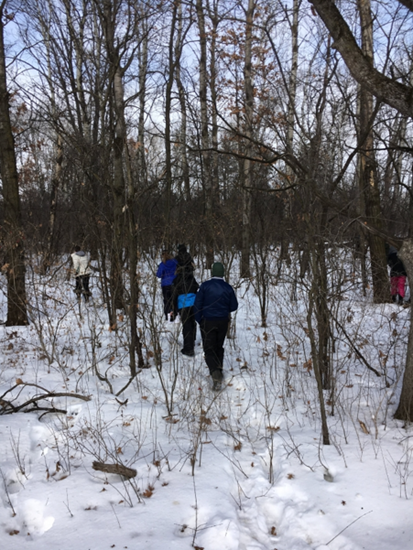
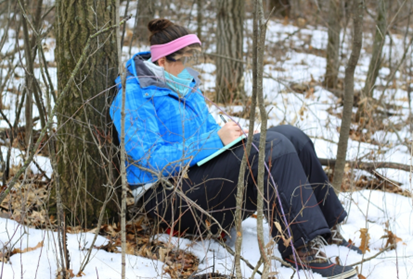
In an attempt to understand the long-term influence of Sit Spot on students’ holistic well-being, we present the findings in two parts. First, we highlight the participants’ spoken words in a composite narrative by combining stories shared by the former students about their Sit Spot experiences to produce a cohesive narrative. Utilizing composite narratives allowed us to provide a comprehensive depiction of a collective group’s experiences, capturing overarching insights while also recognizing the intricacies of individual perspectives (Willis, 2018). Composite narratives also allowed us to safeguard the anonymity of our participants during particularly vulnerable moments by contextualizing individual stories as part of the group narrative and thus adding another layer of protection on individual identities (see McElhinney & Kennedy, 2022). To construct a composite narrative that is both coherent and honest, the researcher must develop a deep connection to the data; an intimate familiarity with the full dataset is essential in order to ensure that the narrative authentically reflects the lived experiences of participants. We integrated separate student participant extracts into one cohesive narrative using exact words and phrases; only minor adjustments were made for grammar or ease of reading in order to present their experiences in an understandable way. Figure 2 and Figure 3 are images which supplement the composite narrative.
Secondly, we describe three important themes that are developed through formal analysis which are substantiated within the composite narrative. Riessman (2008) explains that in narrative research, the goal is often to understand how individuals make sense of their own lives, rather than to impose external analytic frameworks. In such cases, narratives may be allowed to stand on their own, with the researcher’s role centering on framing, contextualizing, and selecting illustrative excerpts, rather than dissecting every component through a rigid analytic lens. Thus, we present the three themes after the composite narrative to frame how participants made sense of their Sit Spot experiences rather than breaking down each aspect of their interpretation.
Composite Narrative
Thank you, dear forest, for planting my roots and grounding me with the simple event of sitting by a tree. I want to shoot roots down into the ground and just stay here.
We would go outside almost every day, which was huge. I realize now how much I needed that and still do. Young people and all people are built to be outside. Physiologically it’s good for us. We need to just set aside some time to unwind because we live in a very different world than from even when I was in high school. That was nine years ago, and I feel like now there is even more technology and we’re even more immersed. Screens! Just staring at them all day, and I think everyone would be better off if there was more of a focus on detaching for a little bit. So when we would go out for Sit Spot, I remember feeling just like relief, especially since Region High was, and I’m sure still is, really sort of like grades- and data-driven and intense. There are very specific things that teachers are expecting you to get out of the class, so Sit Spot was a stress reliever that we all really needed. It also offered an opportunity to value different things–spontaneity, fun, being outside, and using your whole body, not just your brain. There might be days where I felt safer outside. Wally wasn’t explicit about this, but there was definitely a huge social/emotional benefit to Sit Spot and our journals.
In a way, Wally had a contagious enthusiasm. He was also calm and relaxed, even though it’s maybe a little more liability of like letting kids go into the woods during school. He was confident and trusted us, and because he trusted us, I think that helped us trust ourselves too. I knew that he would look at the Sit Spot journals, and it didn’t matter if we drew or if we wrote down an idea or question we thought was stupid. Wally guided us towards the answers, building rapport with his students in a thousand little ways. He trusted us to be able to find that information as a student and to feed that curiosity. We trusted that this process was going to be worth it.
During Sit Spot I could just close my eyes and listen to sounds: animals, the wind, and other things in the woods. Wonder was something I allowed to happen, and the space itself nurtured the creativity and the curiosity. Specifically, Wally wanted us to take two or three pages of notes, like the stream of consciousness. And then, on top of that, he challenged us to see what we could observe in our surroundings. Often Sit Spot was just a serene, quiet, and a beautiful thing to have built into the school day. I found those moments best used to kind of reflect and have quiet space. So that’s how I usually did it - as like a personal meditation, or almost like a recharging in nature. Many times I soaked up thinking about nothing because in school and with social dynamics in high school I feel like your brain is always running at 100 miles an hour. So at Sit Spot I’d write down what I noticed about myself in that moment. It involved a lot of journaling about me in the outdoors and how I was feeling. Other times I would process what was going on in my relationships, kind of check in with myself, and have, like my almost internal voice, get louder in a way.
It definitely helped me learn how important being outside was for my mental health because, like a lot of high schoolers, those years were not a high point. Being in that space and making Sit Spot a routine felt so grounding because every other part of my life wasn’t routine–everything was chaos. It became an interconnected place, and I just felt like, when I was there, I was clear-headed to have a conversation, whether it was with myself or whether it was with nature around me. You’re sitting there and being present, and sometimes it’s very, very hard to do that. When you’re in school, it’s very much, go, go, go, and everything else. You have time at Sit Spot to kind of listen to what’s going on inside you, so I would work through personal stuff. A lot of people did Sit Spot differently, but we had the option to choose what we wanted to do. That’s what made it so beautiful.
After I left Region High, I returned a few times to my Sit Spot, to check in on it. I remember specifically, a year or two after I had that class, my grandma got really sick, and I went back and visited my Sit Spot. I wanted that moment in that space because it grounded me, and I was looking for that comfort I had before. I wrote a note to my grandma. And it was like nature didn’t have expectations. Nature didn’t have questions or judgment. More and more it just makes sense because nature could reset me in ways that I couldn’t do otherwise.
Yeah, Sit Spot helped shape my perspective and outlook on life and what was really of interest to me–what’s truly important. Things are growing, things are changing. and it’s just kind of made a pretty profound impact on all my life and my career and what I want it to be. I still try to go for a walk every day, just to get outside. I’m always trying to have some part of me interacting with nature. In college I led a forest bathing group for a year and a half that encouraged reflection and meditation in an outdoor space that was safe and open. And I know that other students will carry Sit Spot with them for the rest of their life, just like me. Even if they don’t go into the field of outdoor learning, those experiences still fostered something that’s deeply, deeply felt.
Now, as an adult, I think it’s really important to help kids get a chance to connect with nature. There’s no way that they’re going to care about it if they don’t connect with it. Because Sit Spot was so freeform, it helped us relate to the natural world around us. It was also a space for everyone to have their own individual experience in nature. And I think teachers who are working to connect students to nature are really going to save the world in a way. The only way our world is going to change for the good is if our generation and the next generation individually care and understand the importance of the natural world around them. We’re connected to it. It’s part of us.
Themes
In response to our research question–what is the long-term influence of Sit Spot on students’ holistic well-being?–the narrative material above presents three primary outcomes regarding Sit Spot’s effects: (1) enduring impact on the whole person, (2) engagement with affect, and (3) a connection and care for nature. We include representative quotes from participants to illustrate the ideas of each theme and to demonstrate how these outcomes were expressed in their own words, highlighting both shared and unique dimensions of their experiences.
Enduring impact on the whole person
The enduring impact of Sit Spot can be seen in the ways that our participants still vividly (and fondly) recall their experiences in high school despite the years that have passed. Sit Spot influenced and continues to have an effect on the former students’ mental health, social-emotional well-being, life habits, and even career choices. One student stated: “I think [Sit Spot] had a pretty profound impact on all my life and my career and what I guess I want it to be.”
Participants described Sit Spot as a routine that provided consistency during a chaotic time in their lives, specifically mentioning how important it was for their mental health. Some even returned to their Sit Spot after graduating high school in times of emotional hardship:
My grandma got really sick I think the year or two after I had that class, and I went back and visited the Sit Spot. I wanted that moment in that space. I was further grounded and I wrote a note to her. I felt like I was looking for that comfort I had before.
Engagement with affect
Sit Spot allowed participants to engage with affect–joy, wonder, and mindfulness–on a regular basis. Student participants commented on the emotions associated with Sit Spots and the correlation to their own sense of happiness. Some students even explicitly described these Sit Spot feelings during their interview:
I think one thing was definitely the wonderment, if that can be considered a word. Like, the more I became aware of the changes around me, the more I came to be in awe of them and really appreciate them. There was just sensory overload in total wonderment of all those changes. And I just wanted everyone to feel that way, to experience what I was experiencing in those moments.
During Sit Spot, students found opportunities to reflect and have a quiet space to listen to their internal voice. Students described Sit Spot as a space for emotional processing, creativity, and internal dialogue. These are qualities rarely afforded in traditional school settings. All of the student participants alluded to the way in which Sit Spot provided opportunities for meaningful reflection wherein they could “have a quiet space” or “reground and meditate in a space that was safe and outdoors.” These moments of emotional resonance underscore Sit Spot’s role beyond just an outdoor routine, but as a trusted space for students to slow down, feel deeply, and reconnect with themselves.
Connection and care for nature
In every interview, Wally’s former students mentioned how attached they felt to the physical place, understanding how that connection facilitated a deep care for the natural world of which they were a part. Because Sit Spot was freeform, students articulated how it helped them relate to the natural world and have significant individual experience in or with nature. One participant directly connected this attachment to a broader environmental ethic:
I feel people need to experience the outdoors to care about it. And if kids don’t get exposed to nature, especially in school, then they might not ever know that it’s something that they care about.
The students in Wally’s class recognized that Sit Spot became an avenue through which to connect to the natural world in a “real tangible, physical way,” contributing towards the ways in which they positively relate to nature throughout their lives.
Mediating Factors
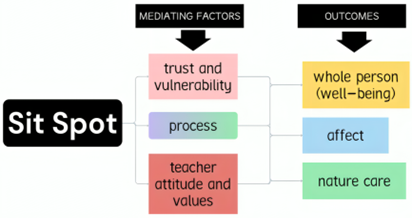
Alongside the three primary themes that emerged from the data, it is important to consider the mediating factors that contributed to the influence of Sit Spot on students’ holistic well-being. Throughout students’ spoken narratives, these mediating factors were recurring ideas that were expressed by many, if not all, participants. Rather than being direct effects of Sit Spot, we consider them the ingredients that went into the success of Sit Spot experiences. Although the narrative material suggests a variety of mediating factors, three specific ones emerged within the data that must be considered alongside overall outcomes: 1) trust and vulnerability, 2) the process of observing and making connections, and 3) teacher attitudes and values.
Figure 4 illustrates the interaction between Sit Spot outcomes and mediating factors as evidenced by the narrative material within this case study.
Trust and vulnerability
Trust and vulnerability is a key mediating factor of Sit Spot. This idea was woven throughout Wally’s interview narrative, but it is important to note that the students themselves also recognized the involvement of trust. One participant shared that “[Wally] was calm, confident, and trusted us. I think that then helped us trust ourselves too.” The interview data highlights how Wally intentionally created a class community where students could be vulnerable in a way that enabled personal growth.
Wally was intentional about curating the social-emotional aspect of Sit Spot and his former students recognized the benefits of Sit Spot that went beyond academics. One student described the interplay between Sit Spot, Wally’s character as a teacher, and trust:
It was there to support you and kinda help you navigate growing up into a young adult. I think the main thing why I get emotional about it, it’s cause [Wally] was really influential in how I handled my mental health. He created a space for me to handle it in a healthy manner.
Wally’s ability to cultivate a space of trust and emotional safety was an important mediating factor that was essential to making Sit Spot a meaningful practice that reached far beyond academic outcomes.
Observing and making connections
The Sit Spot process itself within Wally’s class was a fundamental contributor to the outcomes experienced by students. The particular way Wally implemented it–through sensory observation and reflection–became a catalyst for insight. “There were a couple Sit Spots where I closed my eyes and specifically recorded the sounds … just non-visually observing my environment from what I heard.”
Using Sit Spot journals, Wally alternates between giving students an opportunity to freeform write or to respond to a simple teacher-generated prompt that relates to something he wants them to notice, often related to in-class learning. Students appreciated the opportunity to take notes in an open-ended way through a stream of consciousness and felt challenged to observe their surroundings in a personally meaningful way. Additionally, students made deep ecological connections through structured opportunities to slow down, notice, and reflect:
I remember specific instances sitting out there in Sit Spot. We’d sit and we’d watch how the birds moved or how the weather changed throughout the amount of time. We had the same dedicated journal, so we would have it out there with us. We could go look at what we were curious about last week and then come up with answers to questions we had previously.
These layered practices of noticing and recording transformed Sit Spot beyond a routine and into a slow pedagogy of discovery. Curiosity, memory, and observation wove together to deepen students’ understanding of place.
Teacher attitudes and values
Wally’s value and attitude toward Sit Spot played a key role in its implementation and the positive outcomes evidenced within the narrative material. His enthusiasm, calmness, and respect for student autonomy shaped the learning environment. Students readily identified how Wally’s attitude and values contributed to the success of the Sit Spot experience as well as the entire course:
Wally is naturally a light-hearted person and built relationships with the students in a way that felt like he’s always their mentor–a pure human, just like showing up. He would ask about our day, and he cared about our things.
Students reported that they appreciated Wally’s calm and relaxed demeanor, including the fact that he gave them freedom to explore the woods during school time. They not only recognized his playfulness and energy, but they also noted how his belief in the value of Sit Spot allowed them to take it seriously themselves. More than just a personality trait, Wally’s demeanor reflected an intentional, relational way of teaching that is grounded in care and connection. Ultimately, it was Wally’s consistent embodiment of joy and respect that allowed Sit Spot to become a reflection of the relational pedagogy at the heart of his teaching.
DISCUSSION
The findings of this study contribute to the growing literature on the intersection of place-based education, mindfulness, and student well-being. The enduring impact of Sit Spot can be seen in the ways that our participants still vividly (and fondly) recall their experiences in high school despite the years that have passed. Sit Spot influenced and continues to have an effect on the former students’ mental health, social emotional well-being, life habits, and even career choices. This particular finding harmonizes with the ten constituents that Russell et al. (2013) posit regarding well-being related to nature experiences, particularly the constructs of mental health and sense of security (see Table 1). The fact that retrospective interviews with participants revealed the memorable and enduring nature of their Sit Spot experiences supports the argument that place-based routines in science and environmental education can foster long-term internalized strategies for self-regulation and reflection.
Ramkissoon et al.’s (2013) concept of place affect is useful in interpreting how repeated experiences in nature foster emotional connection. In the case of Sit Spot, participants described feeling “recharged,” “safe,” and “grounded,” suggesting that time outdoors was critical to their overall development. This emotional grounding sets the stage for possible engagement with social-emotional learning, as such affective connection provides the necessary context for developing self-regulation and social competence. The opportunity to engage with affect closely aligns to the sense of place that participants developed. In each and every interview, Wally’s former students mentioned how attached they felt to the physical place, understanding how that connection facilitated a deep care for the natural world of which they were a part. This finding is consistent with other research that highlights the importance of significant life experiences in nature in influencing pro-environmental behavior and ethics (Chawla, 1998, 2009).
At first glance, Sit Spot as a practice within formal education seems remarkably simple: students go to the same outdoor area and observe closely each week. It would be easy to underestimate the role of the teacher and how they must create the conditions for students to engage with their own ideas as they connect with the local ecosystem and their place within it. These mediating factors allowed for the success of the approach by first building and maintaining trust which allowed students and teacher to be vulnerable in the pursuit of their ideas and in the not-knowing. Solitude outdoors often invites vulnerability (Knapp & Smith, 2005), but students were only able to engage meaningfully with that vulnerability because Wally had established trust and safety within the classroom community. Wally is intentional in how he facilitated Sit Spot within a relational context, valuing his students for who they are, not what they achieved (see Clarke, 2023). A classroom culture grounded in relationships and built on trust is necessary for practices like Sit Spot to make an impact on students’ lives.
Creating time and space for students to make observations and connections directly contributed to the influence of Sit Spot, particularly related to caring for nature and the overall enduring impact on the whole person. Other research supports the idea that opportunities for children and youth to observe nature play a pivotal role in promoting nature relationships and care (Chawla, 2009; Merritt & Bowers, 2020). The deep connections to place (Lanouette, 2022) helped to frame both a desire to answer questions arising from student observations as well as the emotional connection to pursue those answers even when it became challenging. Using Sit Spot tapped into the uniquely human process that connects our intense need to know with habits of learning such as observing, data gathering, hypothesizing, etc. The processes utilized within Wally’s Sit Spot approach directly mirror those that scholars often articulate is essential to science education research, namely that emotion is central to sustaining their efforts in problem-solving (Phillips et al., 2018). We see in Wally’s students that they also are inspired and impacted by these experiences well beyond merely delivering the ecological content; the positive impact on their well-being became a source of solace for many participants. This connection to nature resonated with former students for years after their class experiences and provided them with tools to manage stress and anxiety in their day-to-day adult lives.
The ability to reconnect with nature is an essential part of helping our students manage ever-increasing levels of anxiety associated with over-testing and achievement demands in the current education system (Flannery, 2018). In the ever-present time pressure of educational settings, embracing the outdoors enables a slow pedagogy that contrasts with performativity and productivity that is so common in mainstream learning environments (Berg & Seeber, 2017; Clarke, 2023). The consistency of Wally’s Sit Spot process across time, place, and pedagogy allowed for growth in ways that are not possible in standard classroom approaches. Wally was able to use Sit Spot to highlight his own vision for the connection between nature, science education, and holistic well-being. By posing difficult questions and guiding student thinking and questioning, Wally supported student observations and hypothesis building without simply providing the “right” answer.
Previous work has identified an association between outdoor observations in a school setting and the ways in which teachers support students holistically within the context of community (Dean & Jones, 2024). Wally created a community of investigators and thinkers by facilitating the conditions for students to become epistemic agents capable of pursuing and answering their own questions. Epistemic agency is defined as a context where individuals or groups, “determine what forms of knowledge are valued and what practices of knowledge building are appropriate” (Goldman et al., 2021, p. 626). Results like the ones described in Wally’s classroom give pause for how little autonomy and epistemic agency we provide students in K-12 contexts particularly in terms of opportunities to learn or reflect outdoors. Slowing down and intentionally creating space for Sit Spot had profound impacts on students’ care toward nature, affective experience, and well-being. Louv (2008) warned of our ever-increasing disconnect from nature and the implications it can have for children.
Our findings also suggest that Sit Spot holds promise for expanding what counts as science and ecology education in K-12 classrooms. Rather than approaching science as a set of predetermined procedures or outcomes, Sit Spot engages students in authentic ecological inquiry grounded in observation, curiosity, and relationship with place. In this way, Sit Spot rehumanizes science education by honoring students’ lived experiences and affective responses to the natural world. These forms of sense-making are often overlooked or marginalized in mainstream science instruction (Hogan & Bae, 2025), yet they can function as powerful funds of knowledge that deepen students’ engagement and broaden science participation. Science practices that foreground emotion and place, especially in field-based settings, can strengthen students’ engagement and learning (Lanouette, 2022). In this way, Sit Spot offers opportunities for students who may not see themselves represented in traditional school science to connect with ecological phenomena and to recognize themselves as capable knowers.
Considered together, Sit Spot, slow education, and holistic well-being point toward a needed shift in how science is taught and learned in formal settings. As we described in our epistemological premises, our constructionist and relational commitments challenge the positivistic assumptions that continue to dominate much of K-12 science (Lather, 2017; Suppe, 1974) and align with pedagogical approaches that center meaning-making, connection, and context. Our findings show what becomes possible when educators create space for unhurried observation, emotional attunement, and reflective thought. Sit Spot exemplifies an alternative understanding of science education and offers a pathway towards more authentic and student-centered science learning. By embracing such approaches, science education can grow to include more inclusive and ecologically grounded practices that support students’ holistic development while still fostering rigorous scientific understanding.
After we shared our findings with Wally, our teacher participant, he agreed to contribute to our Discussion, sharing his own thoughts and practices as an educator. Wally’s words were not included in the composite narrative since his experiences with Sit Spot were from a different perspective, and he shares his own teacher interpretations. Wally specifically discusses how the mediating factors are closely woven into the positive outcomes he has witnessed over the years through Sit Spot experiences.
Wally’s Words
After implementing Sit Spot for 15 years, I have come to recognize the practice requires risk-taking, trust, vulnerability, and a supportive community to infuse authentic learning into the experience. I scaffold Sit Spot in my classroom as a weekly practice that is used for students to apply scientific concepts from the week as well as an opportunity to create meaning through observations and firsthand encounters. It offers a kind of science learning that isn’t bound to step-by-step procedures, giving students space to notice, wonder, and follow their own questions. To support Sit Spot, I have intentionally built in scaffolds of feedback and shared participation to support students in fostering ownership of their learning and experience (see Table 4). I recognize that my pedagogy to support Sit Spot emerges from my own educational values as well as the ways in which I perceive students and their role within learning community.
Table 4. Wally’s scaffolds for introducing and maintaining Sit Spot rituals
| ||||||||||||||||||||||||||
With these intentional supports and scaffolding, Sit Spot has become a place where students feel safe to be vulnerable academically and personally. They are able to apply their learning within the broader context of the natural world through trust and connection. The external trust supported within each class helps bolster self-confidence and trust in the individual, resulting in opportunities for self-reflection as well as social and emotional growth. Students begin to truly see themselves and the larger ecological systems of which they are a part. For many of them, this is the first time science has felt open-ended and connected to their lives, rather than something done only through labs or worksheets. This sense of connection and belonging are created by the scaffolds of building trust, observation, and reflection. As connection and community expand this trust, the sense of belonging feeds back into deeper observations and reflection through authentic vulnerability and engagement. A community of trust normalizes student reflection and support which in turn cultivates student social and emotional growth and well-being. Students who, at the beginning of the semester, may have been nervous or timid about going outside will jump at the opportunity to do a Sit Spot at -13℉, participate in the rain, or even walk to their spot barefoot.
Over the years I have watched students who are timid or even afraid to go outside grow into individuals who have the self confidence and trust to perform Sit Spot blindfolded forcing them to rely on their other senses. These are students who are demonstrating their own self confidence and trust in the community. I have had many students leave the last Sit Spot of the semester in tears as they say goodbye to a place and a community that has allowed them the space and opportunity to be themselves. Sit Spot creates a space where emotional and academic learning intersect, creating powerful and impactful experiences.
CONSIDERATIONS AND FINAL THOUGHTS
This study tested our theory on the connection between Sit Spot and holistic well-being, contributing to a broader understanding of how this simple, slow practice can support student development and engagement. Although grounded in one localized context, we echo Silverman’s (2000) assertion that qualitative research speaks to theoretical propositions, not general populations. With that in mind, we hope these findings resonate with educators and scholars exploring the role of affect, mindfulness, and place within science education and considering how practices like Sit Spot can broaden what science learning looks like in formal settings.
Sit Spot was not the central feature of the field ecology curriculum, but its recurring presence left a lasting impression. Through careful observation, emotional connection, and content integration, students experienced a powerful process of place-connection and personal growth. In a world filled with distractions and disconnection from nature, Sit Spot offered students the chance to slow down, to notice, and to experience change. Its restorative potential extended far beyond the moment, leaving a profound and enduring impact on students’ lives.
Author contributions: All authors sufficiently contributed to this study and agreed with the results and conclusions.
Funding: No funding source is reported for this study.
Ethical statement: The authors stated that the study was approved by George Mason’s Office of Research Integrity and Assurance on 15 February 2023 with approval number #2000148. Verbal informed consents were obtained from the participants.
AI statement: The authors stated that ChatGPT was used occasionally to enhance the clarity of English language in some sentences. Grammarly was used for proofreading. All content was reviewed and verified by the authors to ensure accuracy and integrity.
Declaration of interest: No conflict of interest is declared by the authors.
Data sharing statement: Data supporting the findings and conclusions are available upon request from the corresponding author.
References
- AQCPE. (2023). Alex–Reference guide on nature-based early childhood education. AQCPE. https://www.aqcpe.com/wp-content/uploads/2023/03/Cadre_reference_Alex_ANG_2023.pdf
- Beavington, L., Huestis, A., & Keever, C. (2021). Ecology and colour in 1 m2: A contemplative, place-based study. Cultural Studies of Science Education, 16, 763-781. https://doi.org/10.1007/s11422-021-10037-9
- Becker, C., Lauterbach, G., Spengler, S., Dettweiler, U., & Mess, F. (2017). Effects of regular classes in outdoor education settings: A systematic review on students’ learning, social and health dimensions. International Journal of Environmental Research and Public Health, 14(5), Article 485. https://doi.org/10.3390/ijerph14050485
- Berg, M., & Seeber, B. K. (2017). The slow professor: Challenging the culture of speed in the academy. University of Toronto Press. https://doi.org/10.3138/9781442663091
- Bogdan, R., & Biklen, S. (1992). Qualitative research for education: An introduction to theory and methods. Allyn & Bacon.
- Braun, V., & Clarke, V. (2022). Thematic analysis: A practical guide. SAGE. https://doi.org/10.1007/978-3-319-69909-7_3470-2
- Butler-Kisber, L. (2010). Qualitative inquiry: Thematic, narrative and arts-informed perspectives. SAGE. https://doi.org/10.4135/9781526435408
- Byrne, G. (2015). Narrative inquiry and the problem of representation: ‘Giving voice’, making meaning. International Journal of Research & Method in Education, 40, 36-52. https://doi.org/10.1080/1743727X.2015.1034097
- Carruthers, V. (2011). Plant yourself on the ground and let your roots grow: Human development through intimate outdoor experiences. Pathways: The Ontario Journal of Outdoor Education, 23(3), 26-28.
- Chambliss, K. M. (2013). Beholding nature: Contemplation and connectedness [PhD thesis, Prescott College].
- Chawla, L. (1998). Significant life experiences revisited: A review of research on sources of environmental sensitivity. Environmental Education Research, 4, 369-382. https://doi.org/10.1080/1350462980040402
- Chawla, L. (2009). Growing up green: Becoming an agent of care for the natural world. Journal of Developmental Processes, 4(1), 6-23.
- Chawla, L. (2015). Benefits of nature contact for children. Journal of Planning Literature, 30(4), 433-452. https://doi.org/10.1177/0885412215595441
- Cho, J., & Trent, A. (2006). Validity in qualitative research revisited. Qualitative Research, 6(3), 319-340. https://doi.org/10.1177/1468794106065006
- Clandinin, D. J., & Connely, F. M. (2004). Narrative inquiry: Experience and story in qualitative research (1st ed.). Jossey-Bass.
- Clarke, A. (2023). Slow knowledge and the unhurried child: Time for slow pedagogies in early childhood education. Routledge. https://doi.org/10.4324/9781003051626
- Conijn, J. M., Rietdijk, W., Broekhof, E., Andre, L., & Schinkel, A. (2022). A theoretical framework and questionnaire for wonder-full education. Journal of Curriculum Studies, 54(3), 423-444. https://doi.org/10.1080/00220272.2021.1942992
- Corbin, C. B., & Pangrazi, R. P. (2001). Toward a uniform definition of wellness: A commentary. President’s Council on Physical Fitness and Sports Research Digest, 3(15). https://doi.org/10.1037/e603472007-001
- Crotty, M. (2015). The foundations of social research. SAGE.
- Dean, S. N., & Jones, D. A. (2024). An examination of educators’ approaches and strategies when facilitating field study science observations. Interdisciplinary Journal of Environmental and Science Education, 20(3), Article e2415. https://doi.org/10.29333/ijese/14742
- DeJaeghere, J., & Arur, A. (2024). Using prospective and retrospective interviews to understand girls’ educational aspirations, subjectivities and social change. In J. Cook, Q. Maire, & J. Wyn (Eds.), Longitudinal methods in youth research. Perspectives on children and young people (vol 15, pp. 39-52). Springer. https://doi.org/10.1007/978-981-97-2332-4_4
- Derr, V., Chawla, L., & Mintzer, M. (2018). Place-making with children & youth: Participatory practices for planning sustainable communities. New Village Press.
- Doghonadze, N. (2016). Slow education movement as a student-centered approach. In Proceedings of the 6th International Research Conference on Education, Language & Literature.
- Fivush, R., Habermas, T., Waters, T. E. A., & Zaman, W. (2011). The making of autobiographical memory: Intersections of culture, narratives and identity. International Journal of Psychology, 46(5), 321-345. https://doi.org/10.1080/00207594.2011.596541
- Flannery, M. (2018). The epidemic of anxiety among today’s students. neaToday. https://www.nea.org/nea-today/all-news-articles/epidemic-anxiety-among-todays-student
- Gao, J., & Chugh, R. (2023). Conducting qualitative research in education. In P. Liamputtong (Ed.), How to conduct qualitative research in social science (pp. 204-220). Edward Elgar Publishing. https://doi.org/10.4337/9781800376199.00018
- Garton-Gundling, K. (2019). Mindfulness as slow education in the first-year composition classroom. In J. Chambers, & S. S. Gearhart (Eds.), Reversing the cult of speed in higher education: The slow movement in the arts and humanities. Routledge. https://doi.org/10.4324/9781315113555-14
- Gill, T. (2014). The benefits of children’s engagement with nature: A systematic literature review. Children, Youth and Environments, 24, 10-34. https://doi.org/10.1353/cye.2014.0024
- Goldman, S., Luce, M., Vea, T. (2020). Opportunities and tensions in family science: Challenging dominant paradigms of science education. Cultural Studies of Science Education, 16(2), 621-641. https://doi.org/10.1007/s11422-020-09998-0
- Gubrium, J. F., & Holstein, J. A. (2003). Postmodern interviewing. Vintage. https://doi.org/10.4135/9781412985437
- Hamilton, L., & Corbett-Whittier, C. (2013). The case study approach in education research. SAGE. https://doi.org/10.4135/9781473913851
- Hogan, E., & Bae, C. (2025). Bridging student funds of knowledge with science discourse: An examination of the organizational context that shaped teachers’ sense of agency for instructional change. Science Education, 109(4), 1090-1113. https://doi.org/10.1002/sce.21941
- Holt, M. (2002). It’s time to start the slow school movement. Phi Delta Kappan, 84(4), 264-271. https://doi.org/10.1177/003172170208400404
- Holt, M. (2009). The nature and purpose of education. Center for Ecoliteracy. https://www.ecoliteracy.org/article/nature-and-purpose-education
- Honoré, C. (2013). The slow fix: Solve problems, work smarter, and live better in a world addicted to speed (1st ed.). HarperOne.
- Hubball, H., & West, D. (2008). Silence and authentic reflection strategies: Holistic learning in an outdoor education program. Physical & Health Education Journal, 74(2), 12-14.
- Impola, J. T. (2023). Reconsidering Newtonian temporality in the context of time pressures of higher education. Studies in Philosophy and Education, 42(4), 431-448. https://doi.org/10.1007/s11217-023-09879-3
- Johnson, R. B., & Christensen, L. (2014). Educational research: Quantitative, qualitative, & mixed approaches (5th ed.). SAGE.
- Kim, J. H. (2015). Understanding narrative inquiry: The crafting and analysis of stories as research. SAGE. https://doi.org/10.4135/9781071802861
- Knapp, C. E., & Smith, T. E. (Eds.) (2005). Exploring the power of solo, silence, and solitude. Association for Experiential Education.
- Lanouette, K. (2022). Emotion, place, and practice: Exploring the interplay in children’s engagement in ecologists’ sampling practices. Science Education, 106, 610-644. https://doi.org/10.1002/sce.21702
- Lather, P. (2017). [Post]critical methodologies: The science possible after the critiques: The selected works of Patti Lather. Routledge. https://doi.org/10.4324/9781315619538
- Lee, C. G. (2012). Reconsidering constructivism in qualitative research. Educational Philosophy and Theory, 44(4), 403-412. https://doi.org/10.1111/j.1469-5812.2010.00720.x
- Lincoln, Y. S., & Guba, E. G. (1985). Naturalistic inquiry. SAGE. https://doi.org/10.1016/0147-1767(85)90062-8
- Loades, M. E., Chatburn, E., Higson-Sweeney, N., Reynolds, S., Shafran, R., Brigden, A., Linney, C., McManus, M. N., Borwick, C., & Crawley, E. (2020). Rapid systematic review: The impact of social isolation and loneliness on the mental health of children and adolescents in the context of COVID-19. Journal of the American Academy of Child & Adolescent Psychiatry, 59(11), 1218-1239. https://doi.org/10.1016/j.jaac.2020.05.009
- Louv, R. (2008). Last child in the woods: Saving our children from nature–Deficit disorder. Algonquin Books.
- Maxwell, J. A. (2013). Qualitative research design: An interactive approach. SAGE.
- Maynes, M. J., Pierce, J. L., & Laslett, B. (2012). Telling stories: The use of personal narratives in the social sciences and history. Cornell University Press.
- McCree, M., Cutting, R., & Sherwin, D. (2018). The Hare and the Tortoise go to forest school: Taking the scenic route to academic attainment via emotional wellbeing outdoors. Early Child Development and Care, 188(7), 980-996. https://doi.org/10.1080/03004430.2018.1446430
- McElhinney, Z., Kennedy, C. (2022). Enhancing the collective, protecting the personal: The valuable role of composite narratives in medical education research. Perspectives on Medical Education, 11, 220-227. https://doi.org/10.1007/s40037-022-00723-x
- Merriam, S. B., & Tisdell, E. J. (2016). Qualitative research: A guide to design and implementation. John Wiley & Sons.
- Merritt, E. G., & Bowers, N. (2020). Missed opportunities for observation-based ecology in the next generation science standards. Science Education, 104(4), 619-640. https://doi.org/10.1002/sce.21572
- Michaelson, V., King, N., & Pickett, W. (2018). Holistic health in children: Conceptualization, assessment and potential. Springer. https://doi.org/10.1007/978-3-319-64831-6
- Miles, M. B., Huberman, A. M., & Saldaña, J. (2020). Qualitative data analysis: A methods sourcebook (4th ed.). SAGE.
- Nagata, J. M., Al-Shoaibi, A. A., Leong, A.W., Zamora, G., Testa, A., Ganson, K. T., & Baker, F. C. (2024). Screen time and mental health: A prospective analysis of the adolescent brain cognitive development (ABCD) study. BMC Public Health, 24, Article 2686. https://doi.org/10.1186/s12889-024-20102-x
- Ng, H. N., & Boey, K. W. (2021). Efficacy of body-mind-spirit oriented psychosocial programme in promoting holistic well-being of students in late adolescence. Asia Pacific Journal of Counselling and Psychotherapy, 12(1), 22-37. https://doi.org/10.1080/21507686.2021.1876114
- Norton, C. L., & Watt, T. T. (2014). Exploring the impact of a wilderness-based positive youth development program for urban youth. Journal of Experiential Education, 37(4), 335-350. https://doi.org/10.1177/1053825913503113
- Passarelli, A., Hall, E., & Anderson, M. (2010). A strengths-based approach to outdoor and adventure education: Possibilities for personal growth. Journal of Experiential Education, 33(2), 120-135. https://doi.org/10.1177/105382591003300203
- Phillips, A. Watkins, J., & Hammer, D. (2018). Beyond “asking questions”: Problematizing as disciplinary activity. Journal of Research in Science Teaching, 55(7), 982-998. https://doi.org/10.1002/tea.21477
- Pierce, J., & Telford, J. (2023). From McDonaldization to place-based experience: Revitalizing outdoor education in Ireland. Journal of Adventure Education and Outdoor Learning, 25(2), 412-425. https://doi.org/10.1080/14729679.2023.2254861
- Racine, N., McArthur, B. A., Cooke, J. E., Eirich, R., Zhu, J., & Madigan, S. (2021). Global prevalence of depressive and anxiety symptoms in children and adolescents during COVID-19: A meta-analysis. JAMA Pediatrics, 175(11), 1142-1150. https://doi.org/10.1001/jamapediatrics.2021.2482
- Ramkissoon, H., Smith, L. D. G., & Weiler, B. (2013). Relationships between place attachment, place satisfaction and pro-environmental behaviour in an Australian national park. Journal of Sustainable Tourism, 21(3), 434-457. https://doi.org/10.1080/09669582.2012.708042
- Riessman, C. K. (2008). Narrative methods for the human sciences. SAGE.
- Ritzer, G. (1993). The McDonaldization of society: An investigation into the changing character of contemporary social life. Pine Forge Press.
- Robinson, K. (2010). Bring on the learning revolution. TED. http://www.ted.com/talks/sir_ken_robinson_bring_on_the_revolution#t-3099
- Russell, R., Guerry, A. D., Balvanera, P., Gould, R. K., Basurto, X., Chan, K. M. A., Klain, S., Levine, J., & Tam, J. (2013). Humans and nature: How knowing and experiencing nature affect well-being. Annual Review of Environment and Resources, 38, 473-502. https://doi.org/10.1146/annurev-environ-012312-110838
- Saldaña, J., & Omasta, M. (2018). Qualitative research: Analyzing life. SAGE.
- Selwyn, N. (2012). Researching the once-powerful in education: The value of retrospective elite interviewing in education policy research. Journal of Education Policy, 28(3), 339-352. https://doi.org/10.1080/02680939.2012.728630
- Sherman, B. J., Bateman, K. M., Jeong, S., & Hudock, L. A. (2021). Dialogic meta-ethnography: Troubling methodology in ethnographically informed qualitative inquiry. Cultural Studies of Science Education, 16(1), 279-302. https://doi.org/10.1007/s11422-019-09961-8
- Silva, A., Antunes, J., Peixoto, J., Goncalves, M., Alves, F., Silva, J., Garrido, N., & Matos, M. (2018). Domestic violence: The impact of a nature-based holistic development program on victims’ well-being. Ecopsychology, 10(3), 158-172. https://doi.org/10.1089/eco.2018.0019
- Silverman, D. (2000). Doing qualitative research. SAGE.
- Singer, J. A. (2004). Narrative identity and meaning making across the adult lifespan: An introduction. Journal of Personality, 72(3), 437-460. https://doi.org/10.1111/j.0022-3506.2004.00268.x
- Slow Education. (2022). What is slow education? Slow Education: Deeper Learning. https://sloweducation.co.uk/
- Smith, S. J. (2017). Slow down and smell the eucalypts: Blue Gum Community School and the slow education movement. Journal of Global Education and Research, 1(1), 16-34. https://doi.org/10.5038/2577-509X.1.1.1006
- Smuts, J.C. (1926). Holism and evolution. Macmillan.
- Stapleton, S. R., & Lynch, K. (2021). Fostering relationships between elementary students and the more-than-human world using movement and stillness. Journal of Environmental Education, 52(4), 272-289. https://doi.org/10.1080/00958964.2021.1955650
- Strich, D. (2012). Reflective Sit Spots. Green Teacher, 95, 22-24.
- Suppe, F. (1974). The structure of scientific theories (2nd ed.). University of Illinois Press.
- Tracy, S. J. (2010). Qualitative quality: Eight “big-tent” criteria for excellent qualitative research. Qualitative Inquiry, 16(10), 837-851. https://doi.org/10.1177/1077800410383121
- van Manen, M. (1997). Researching lived experiences: Human science for an action sensitive pedagogy. The Althouse Press.
- Willis, R. (2019). The use of composite narratives to present interview findings. Qualitative Research, 19(4), 471-480. https://doi.org/10.1177/1468794118787711
- Wolgemuth, J. R., & Donohue, R. (2006). Toward an inquiry of discomfort: Guiding transformation in “emancipatory” narrative research. Qualitative Inquiry, 12, 1022-1039. https://doi.org/10.1177/1077800406288629
- Young, J., Haas, E., & McGown, E. (2008). Coyote’s guide to connecting with nature: For kids of all ages and their mentors (1st ed.). OWLLink Media.
- Young, J., Haas, E., & McGown, E. (2010). Coyote’s guide to connecting with nature (2nd ed.). OWLLink Media.
How to cite this article
APA
Dean, S. N., Lane, J., Bocko, P., Gilbert, A., & Jones, D. A. (2026). Slow education, Sit Spot, and holistic well-being: A narrative case study in secondary science education. Interdisciplinary Journal of Environmental and Science Education, 22(2), e2610. https://doi.org/10.29333/ijese/17848
Vancouver
Dean SN, Lane J, Bocko P, Gilbert A, Jones DA. Slow education, Sit Spot, and holistic well-being: A narrative case study in secondary science education. INTERDISCIP J ENV SCI ED. 2026;22(2):e2610. https://doi.org/10.29333/ijese/17848
AMA
Dean SN, Lane J, Bocko P, Gilbert A, Jones DA. Slow education, Sit Spot, and holistic well-being: A narrative case study in secondary science education. INTERDISCIP J ENV SCI ED. 2026;22(2), e2610. https://doi.org/10.29333/ijese/17848
Chicago
Dean, Steph N., Jim Lane, Paul Bocko, Andrew Gilbert, and Devan A. Jones. "Slow education, Sit Spot, and holistic well-being: A narrative case study in secondary science education". Interdisciplinary Journal of Environmental and Science Education 2026 22 no. 2 (2026): e2610. https://doi.org/10.29333/ijese/17848
Harvard
Dean, S. N., Lane, J., Bocko, P., Gilbert, A., and Jones, D. A. (2026). Slow education, Sit Spot, and holistic well-being: A narrative case study in secondary science education. Interdisciplinary Journal of Environmental and Science Education, 22(2), e2610. https://doi.org/10.29333/ijese/17848
MLA
Dean, Steph N. et al. "Slow education, Sit Spot, and holistic well-being: A narrative case study in secondary science education". Interdisciplinary Journal of Environmental and Science Education, vol. 22, no. 2, 2026, e2610. https://doi.org/10.29333/ijese/17848